BuyBacKart is a cutting-edge platform dedicated to revolutionizing the unorganized second-hand smartphone market in India.
At BuyBacKart, we simplify the process of selling old smartphones by offering instant payments, transparent pricing, and hassle-free same-day pickups. Our goal is to bring trust and convenience to the second-hand smartphone market, bridging the gap between users and an organized solution.
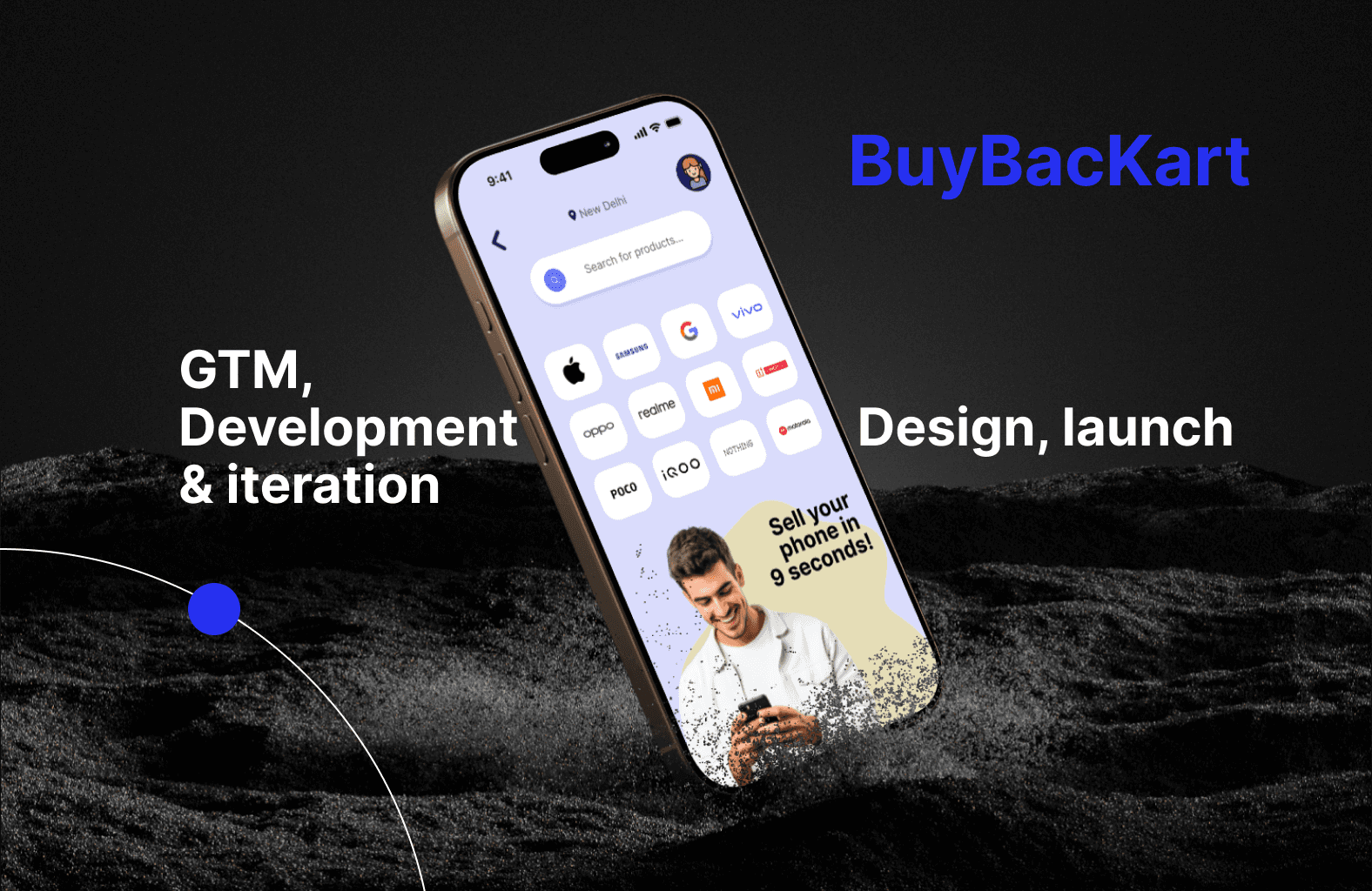
Let's dive in
Building BuyBacKart wasn’t a walk in the park—it was a journey full of challenges and learning. The founder, with over 10 years of experience in the smartphone industry, initially approached me with the idea of venturing into this domain. While we had been operating offline on a small scale, he proposed taking a leap and building the product from scratch.
Leveraging the principles from The Lean Product Playbook, I carefully structured the process of taking the startup from 0 to 1. Here, I’ve broken down the journey into key stages to give you a clear understanding of how we built and scaled BuyBacKart.
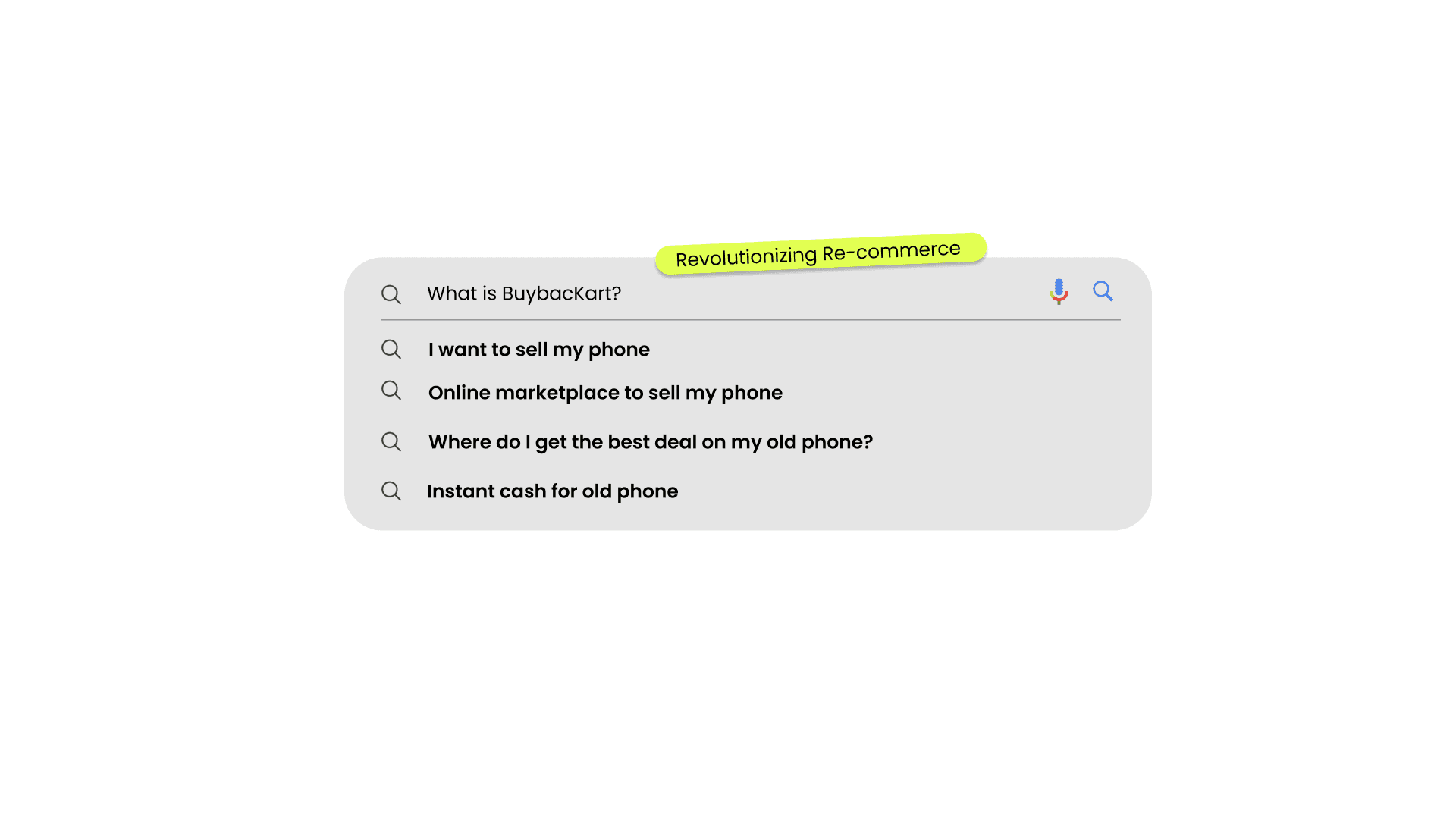
The first question on your mind. In simple words, it's a platform for selling used devices. We aim to revolutionize re-commerce (reverse commerce). Recommerce is the buying and selling of used, refurbished, or returned products.
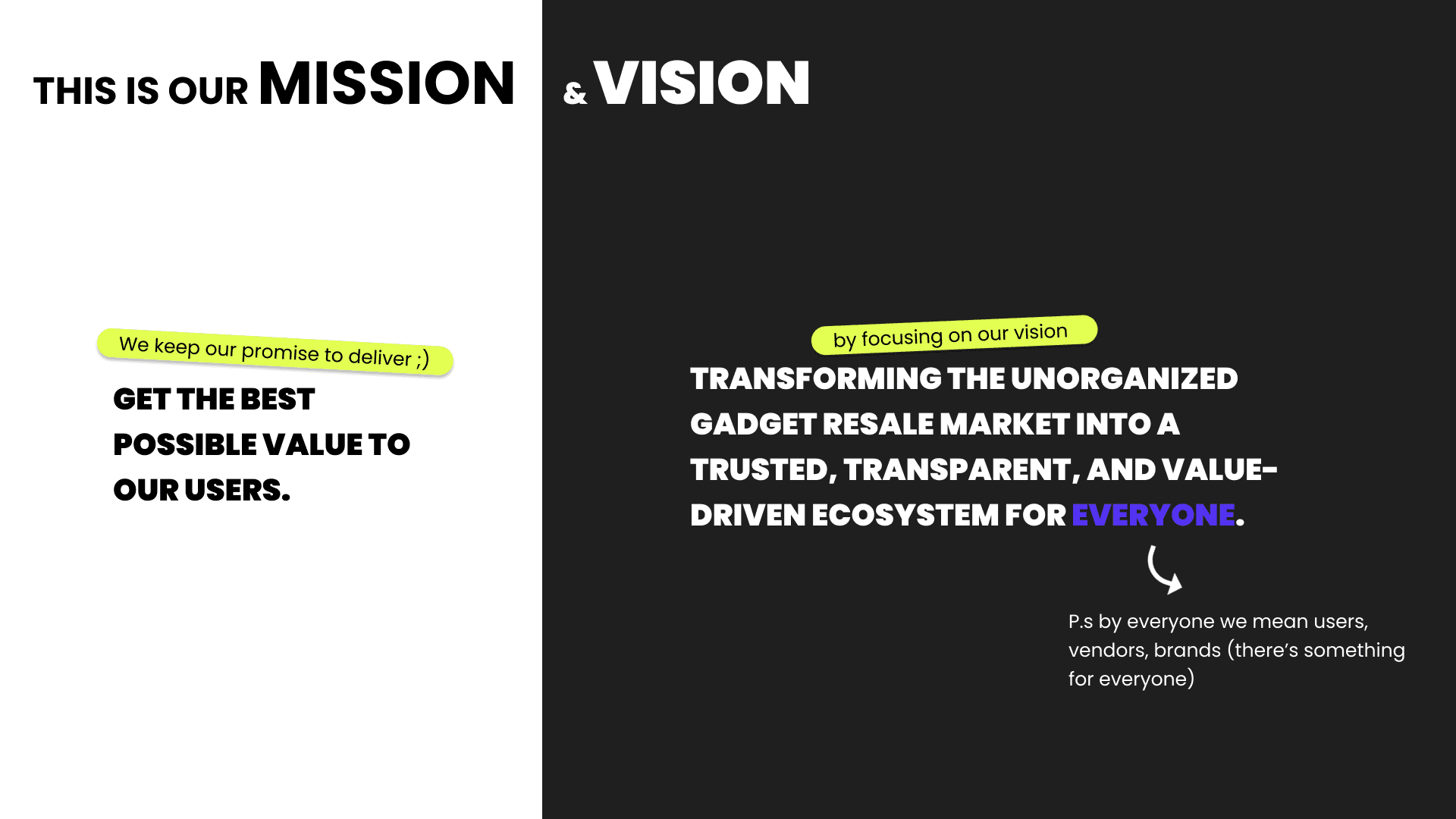
At BuyBackKart, our mission and vision drive every decision we make. We aim to address the challenges in the unorganized second-hand smartphone market by building a platform that prioritizes trust, convenience, and transparency. Our goal is to redefine the way users sell their smartphones, making the process faster, simpler, and more reliable.
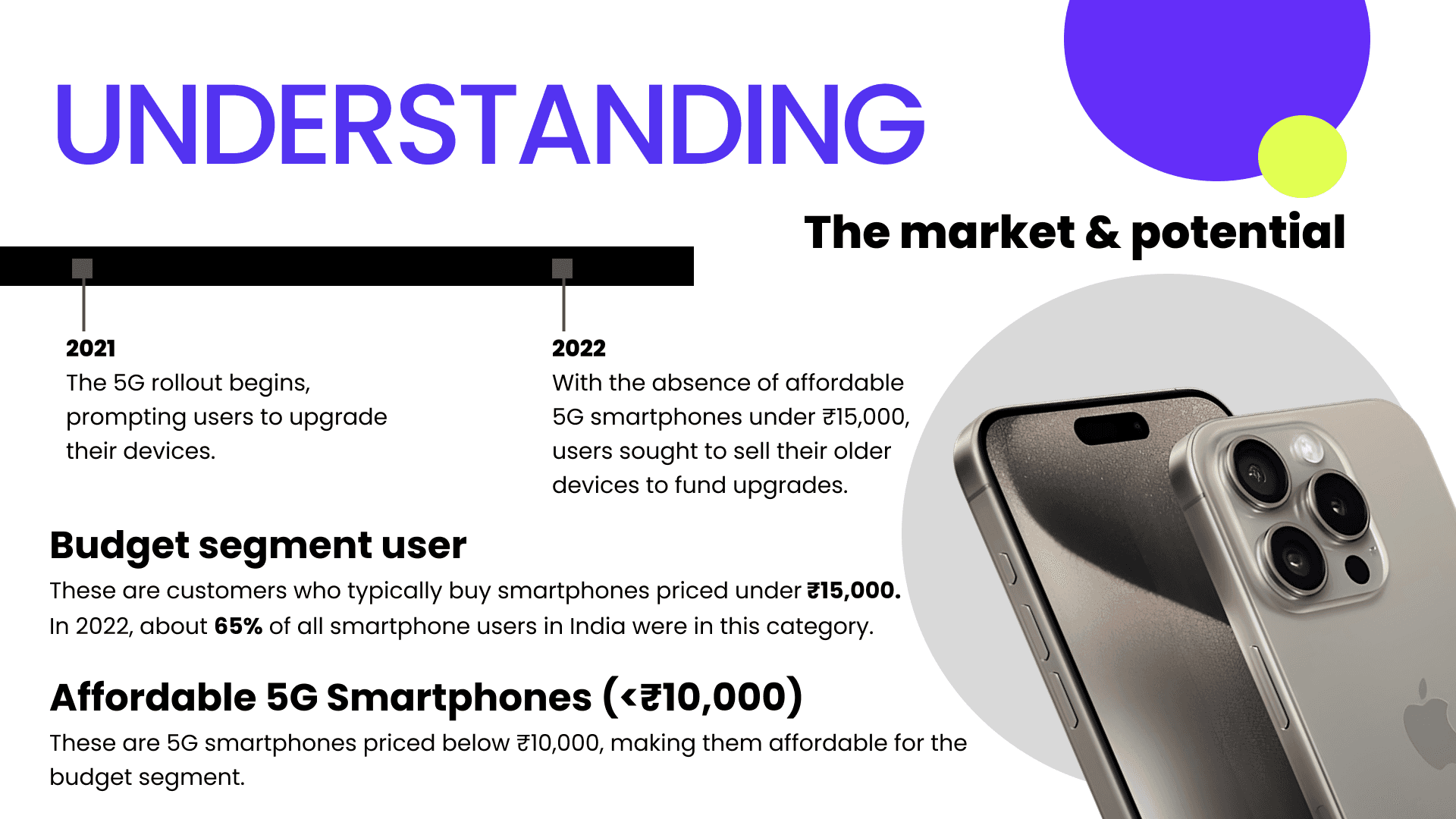
The first step in our journey was to deeply understand the market and uncover the immense potential it holds. By analyzing user behavior, identifying pain points, and recognizing untapped opportunities, we laid the foundation for building a solution that addresses real customer needs.
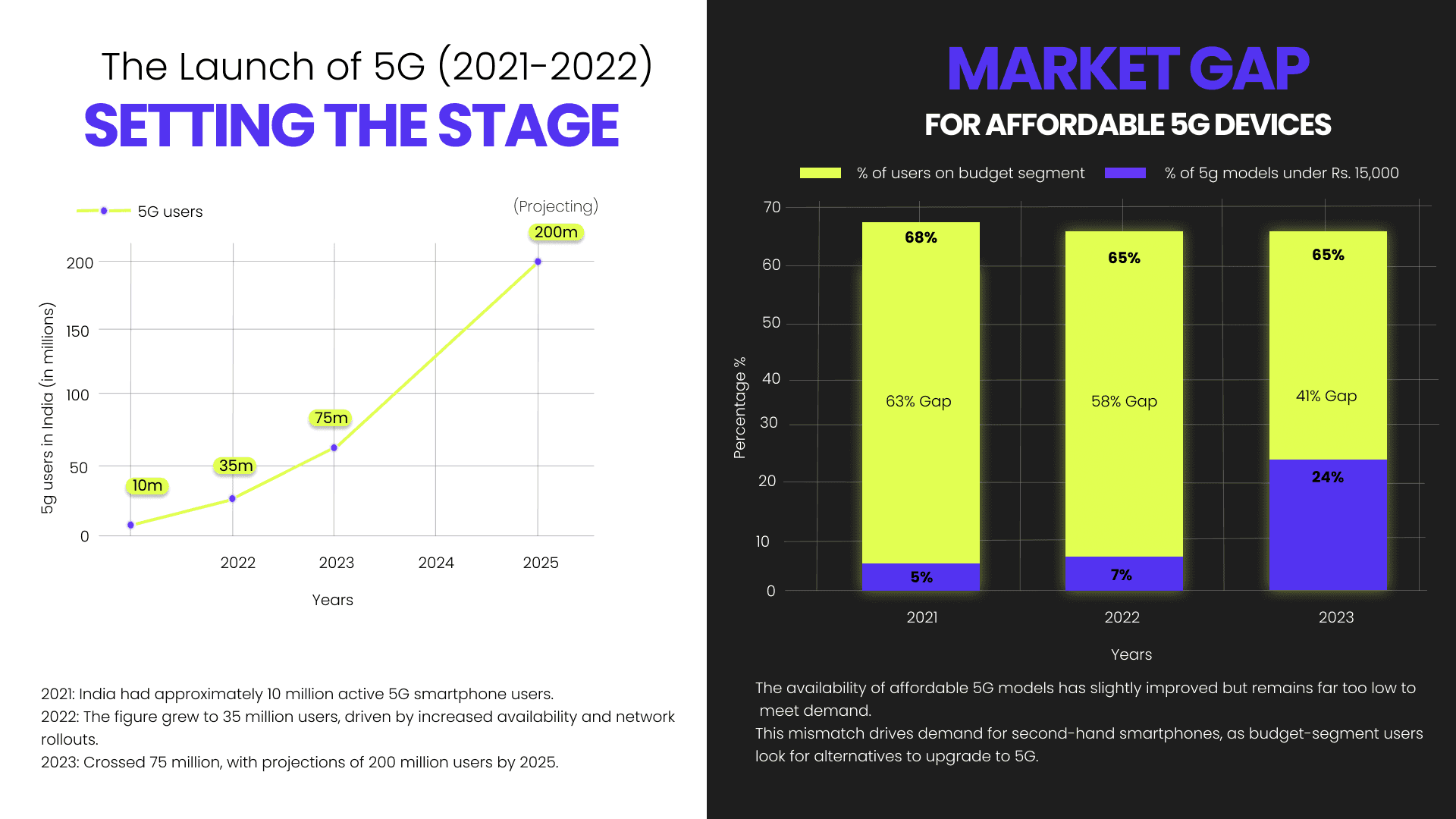
The launch of 5G in India created a strong push for users to upgrade to 5G-enabled smartphones, resulting in many selling their phones within just a year of purchase. However, the scarcity of 5G phones under ₹15,000 led to a significant market gap, driving consumers toward refurbished mid-range smartphones within this price segment.
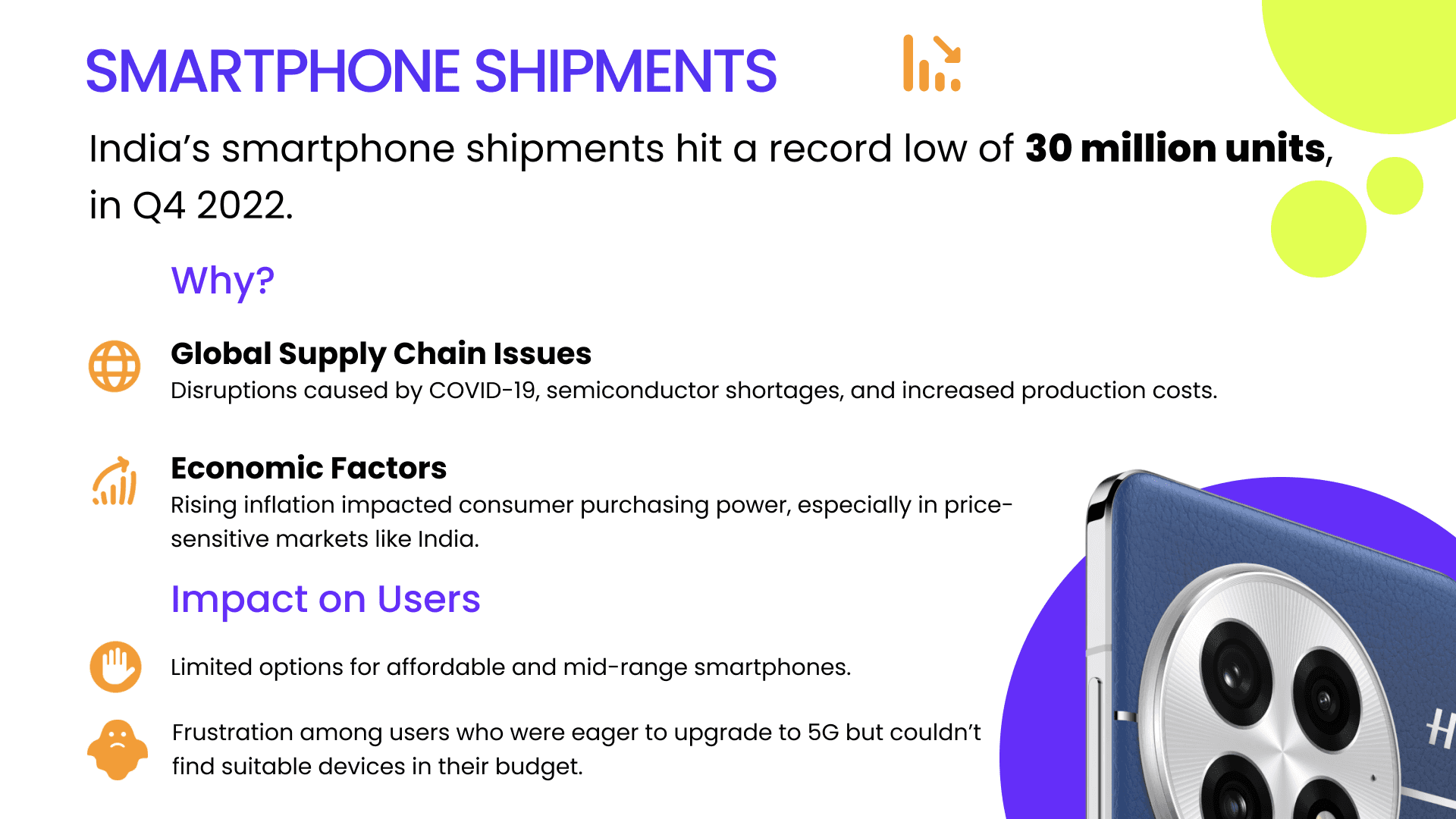
Smartphone shipments in India hit a record low of 30 million units, while demand remained high. However, the market saw a higher shipment of high-range phones compared to mid- and lower-range devices. This disparity further prompted users to sell their current devices to afford new ones, intensifying the cycle of upgrades.
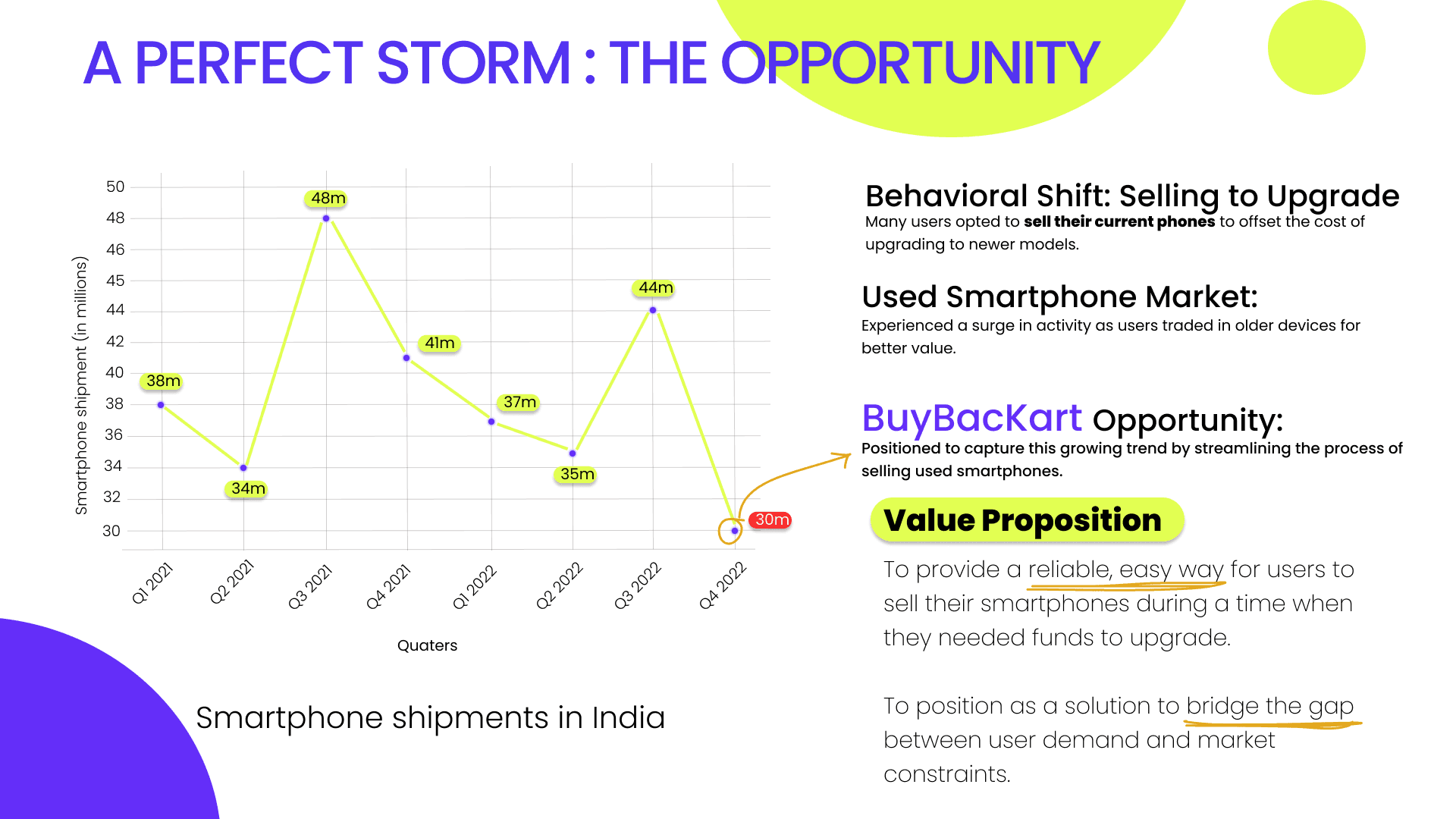
This storm gave us the perfect opportunity to launch BUYBACKART.
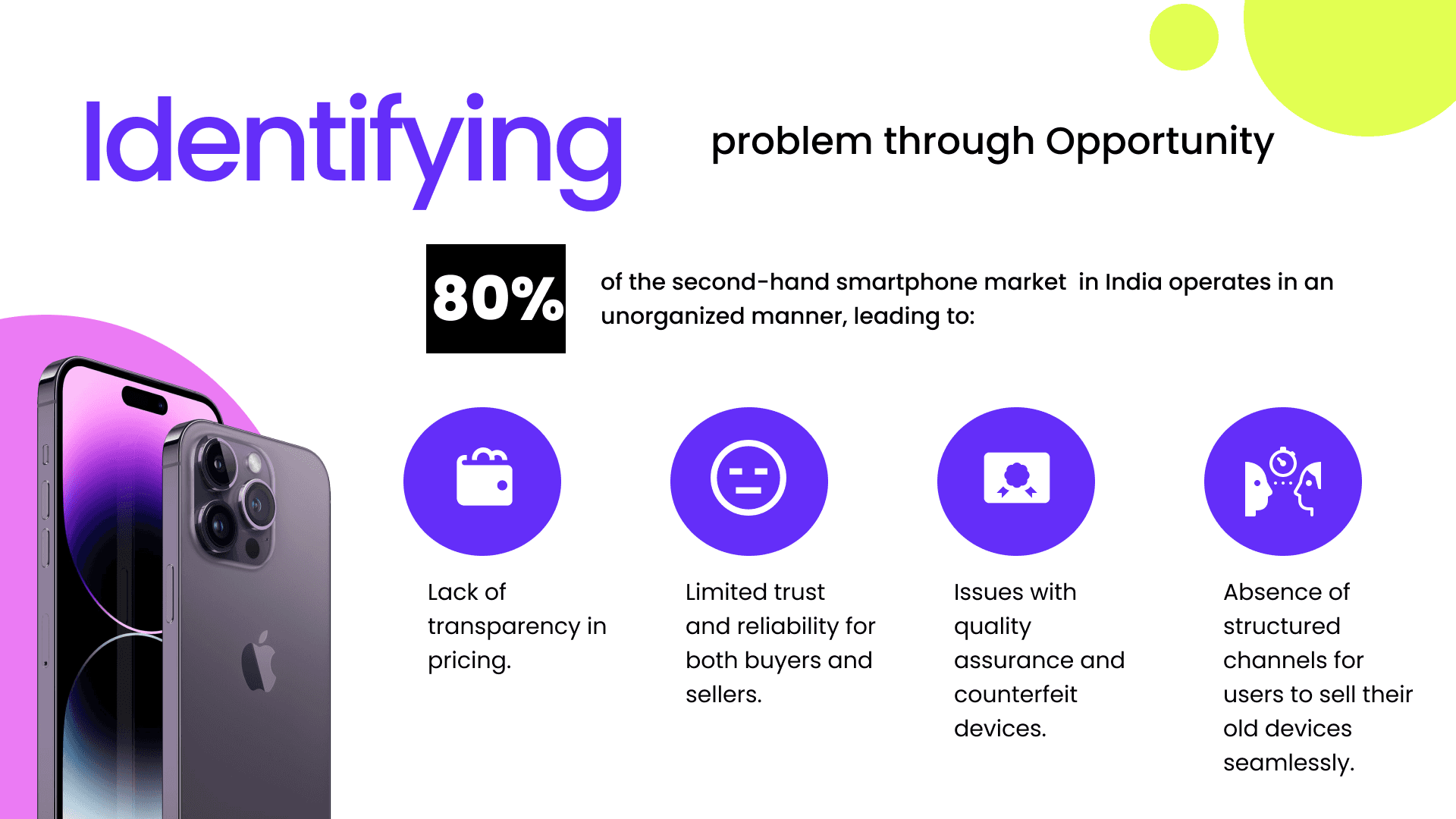
Identifying the opportunity for BuyBacKart began with understanding the unmet needs in the unorganized smartphone resale market, which still accounts for over 80% of the sector. We analyzed key market gaps such as the lack of trust, delayed payments, and a cumbersome selling process. With the launch of 5G and the rising demand for affordable upgrades, users were increasingly looking for platforms to sell their current devices to fund new purchases.
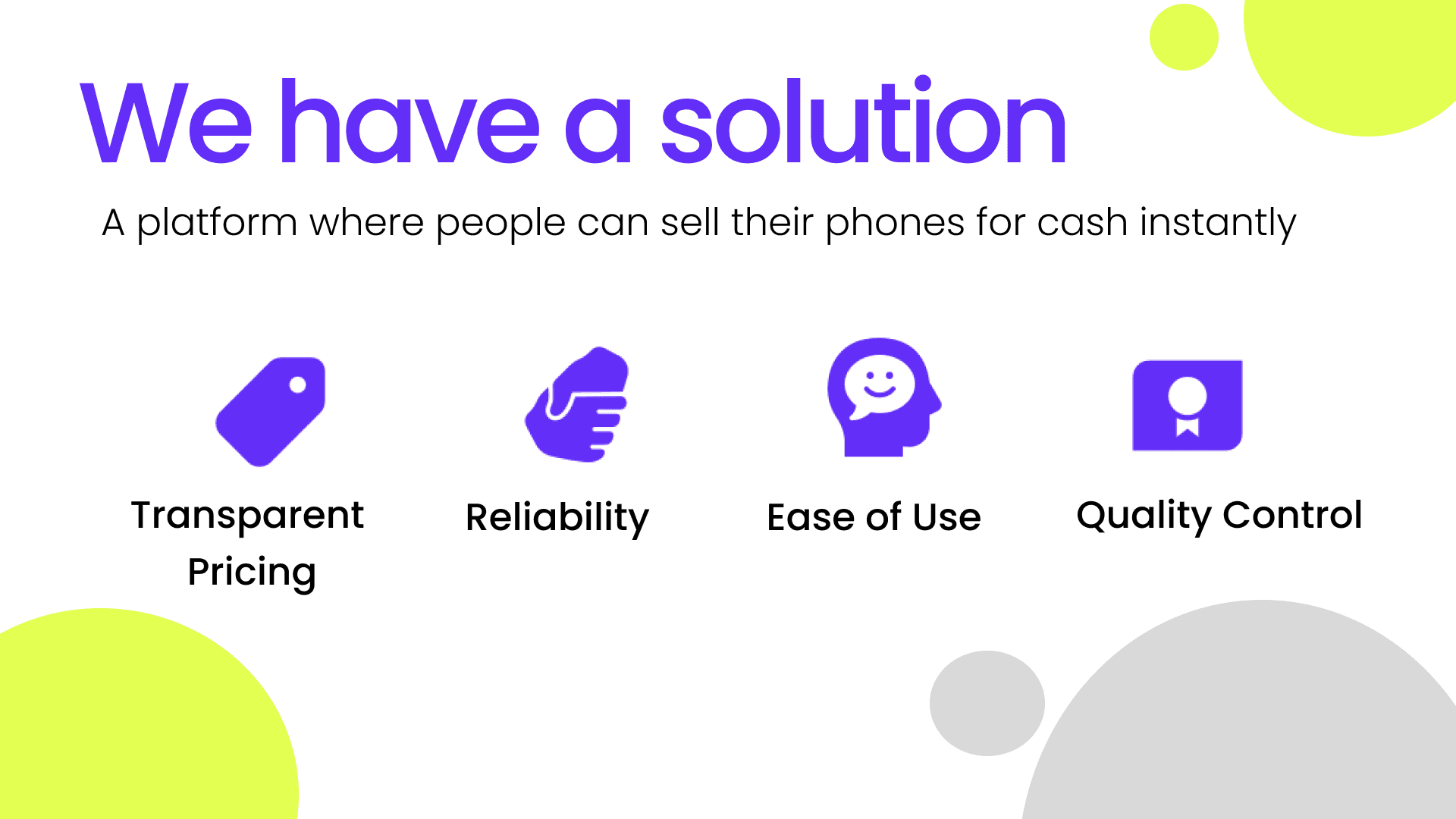
This presented a clear opportunity to build a reliable, transparent, and user-centric platform. BuyBacKart aims to bridge this gap by offering instant payments, transparent pricing, and a seamless selling process, providing users with a hassle-free and trustworthy solution.
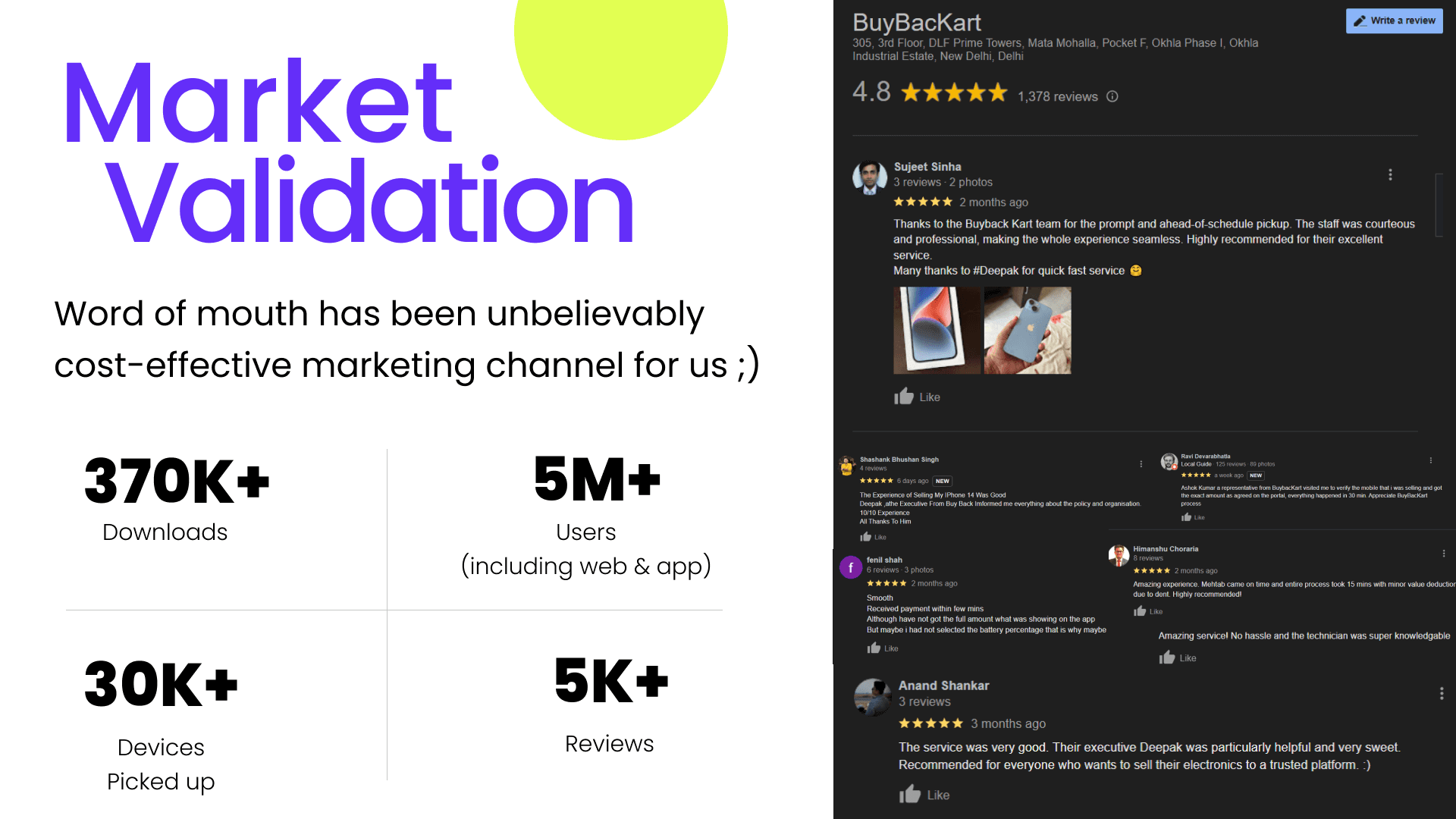
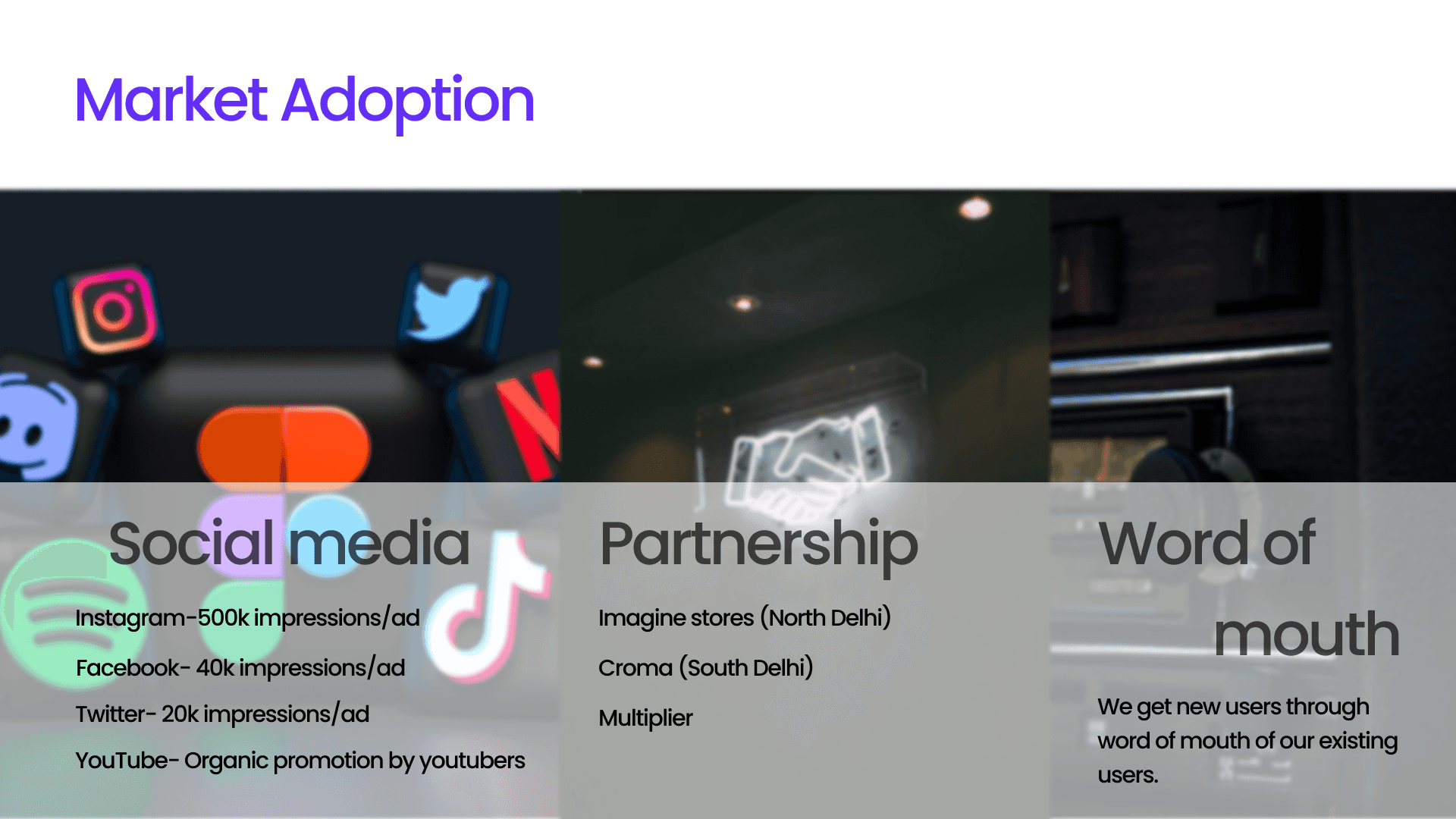
So far, word of mouth has been our strongest marketing channel, complemented by organic reviews on Google. What truly sets us apart is the personal touch our team provides—customers often mention our representatives by name in their reviews, recognizing their dedication and seamless facilitation in helping users sell their phones online. This personal connection has been a cornerstone of building trust and loyalty with our customers.
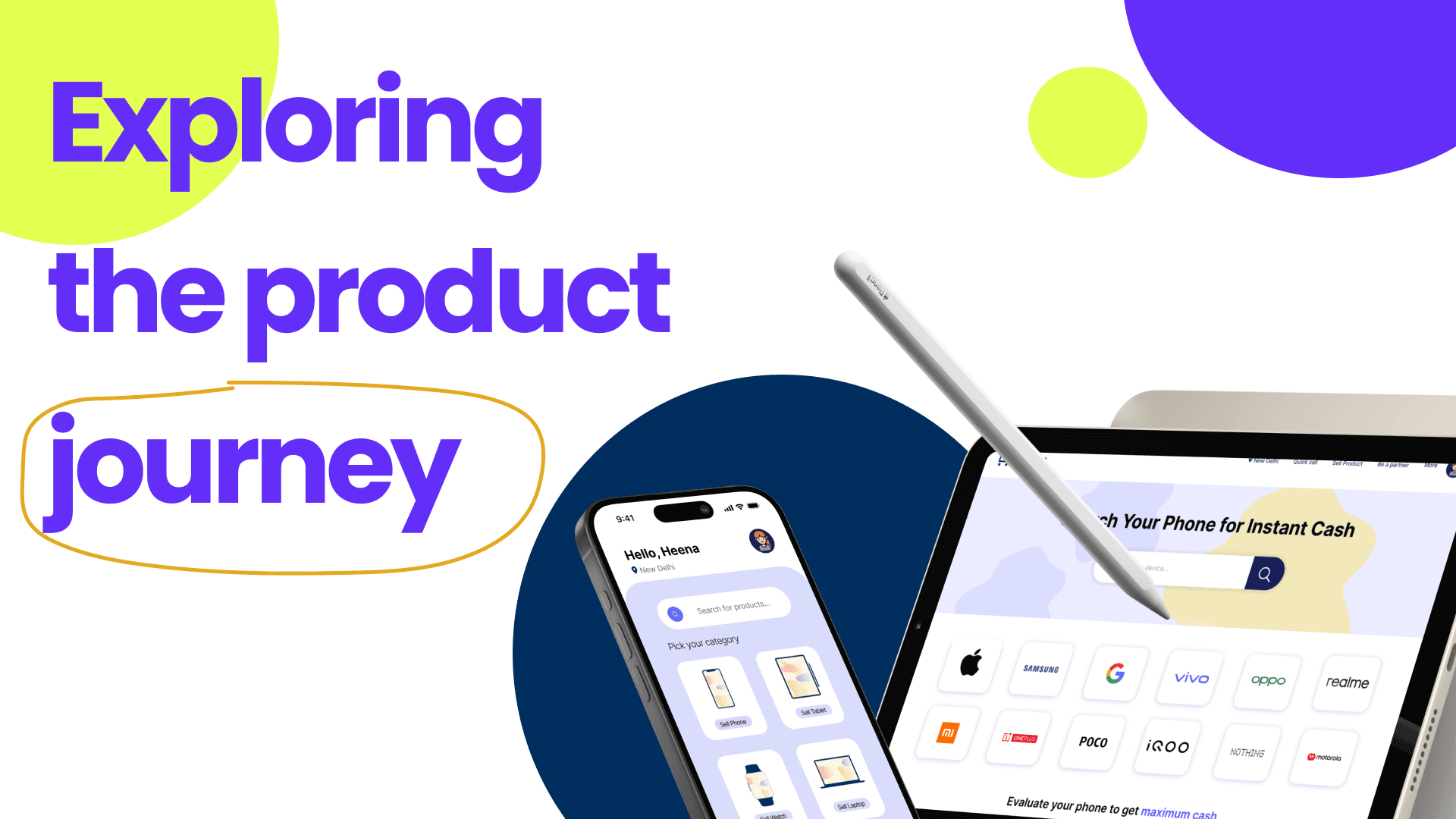
The Product Journey of BuyBackart is a clear illustration of how we stand out from competitors and what makes our platform unique.
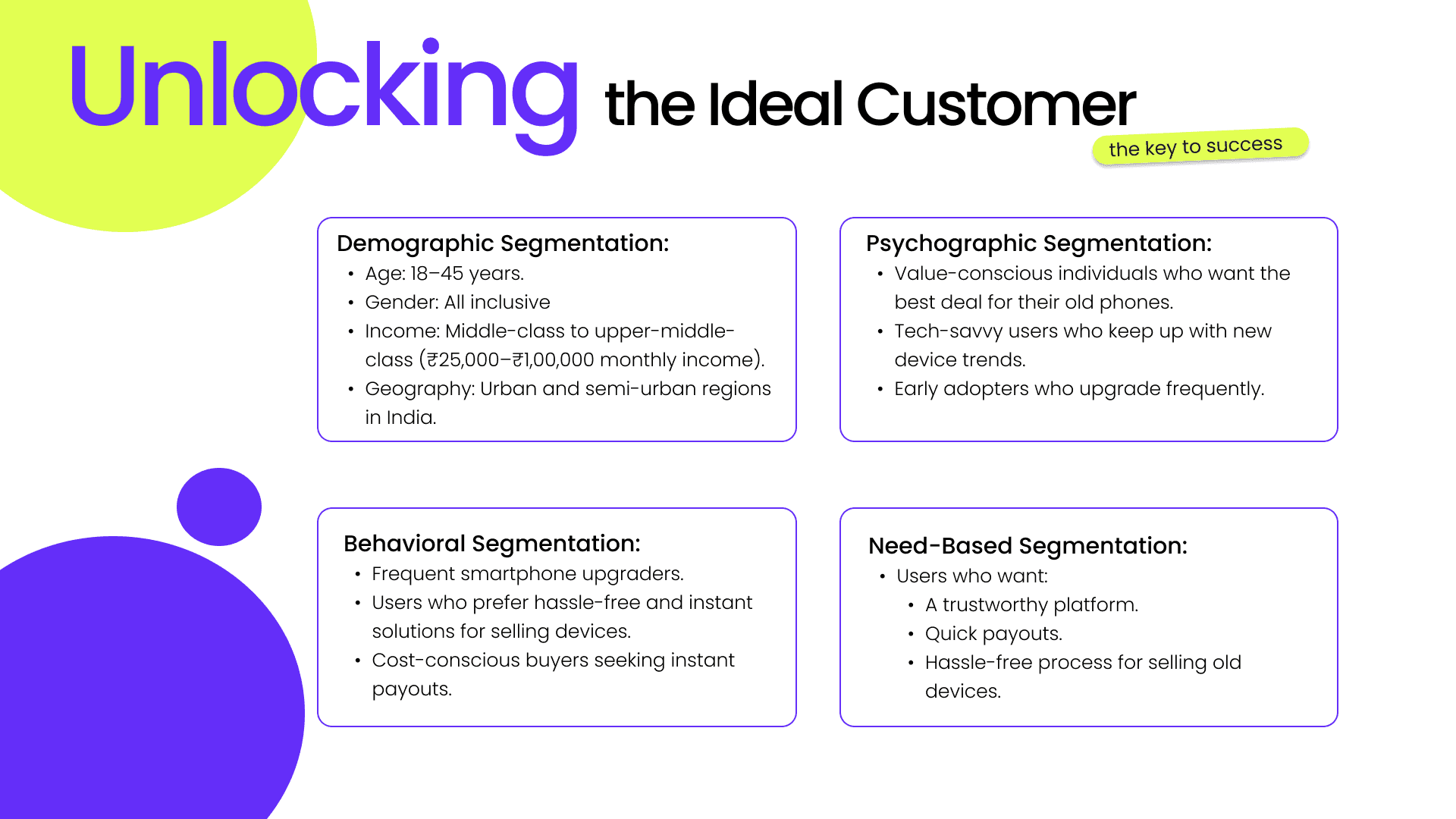
The first and most important step was to identify the ideal customer for the product. Understanding our target audience was crucial in shaping the platform's features, pricing, and overall approach. By clearly defining who our customers were, we could tailor our offerings to meet their specific needs, ensuring maximum satisfaction and engagement. This foundational step allowed us to build a solution that truly resonated with users, giving us a strong competitive edge in the market.
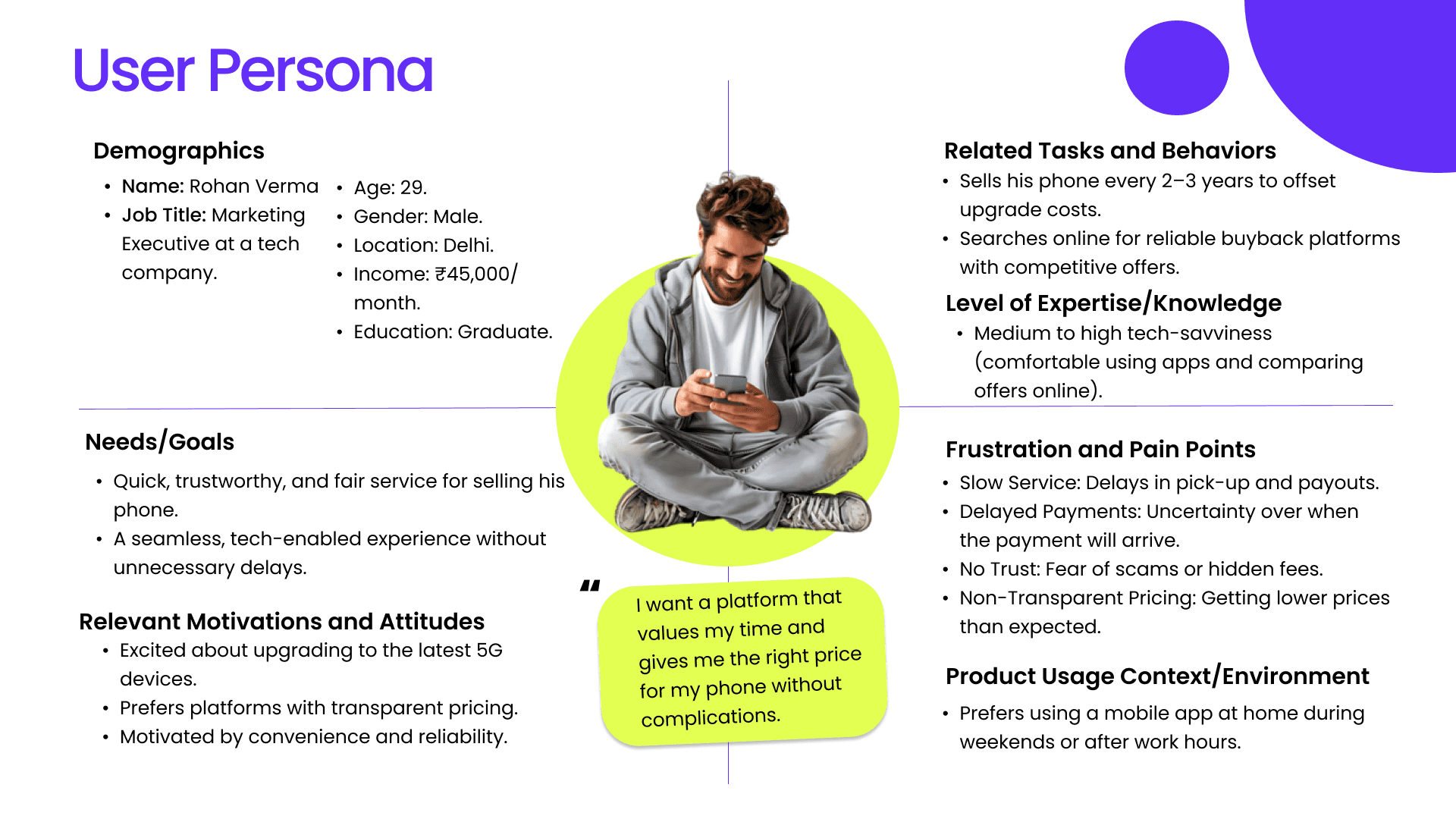
Meet Rohan Verma, a resident of Delhi who earns Rs. 45,000 a month. Rohan has a habit of frequently upgrading his phone, but he's not satisfied with the current alternatives available in the market. Despite his regular need for upgrading, he finds the process inconvenient and often feels that the value he receives for his old phones isn't competitive enough.
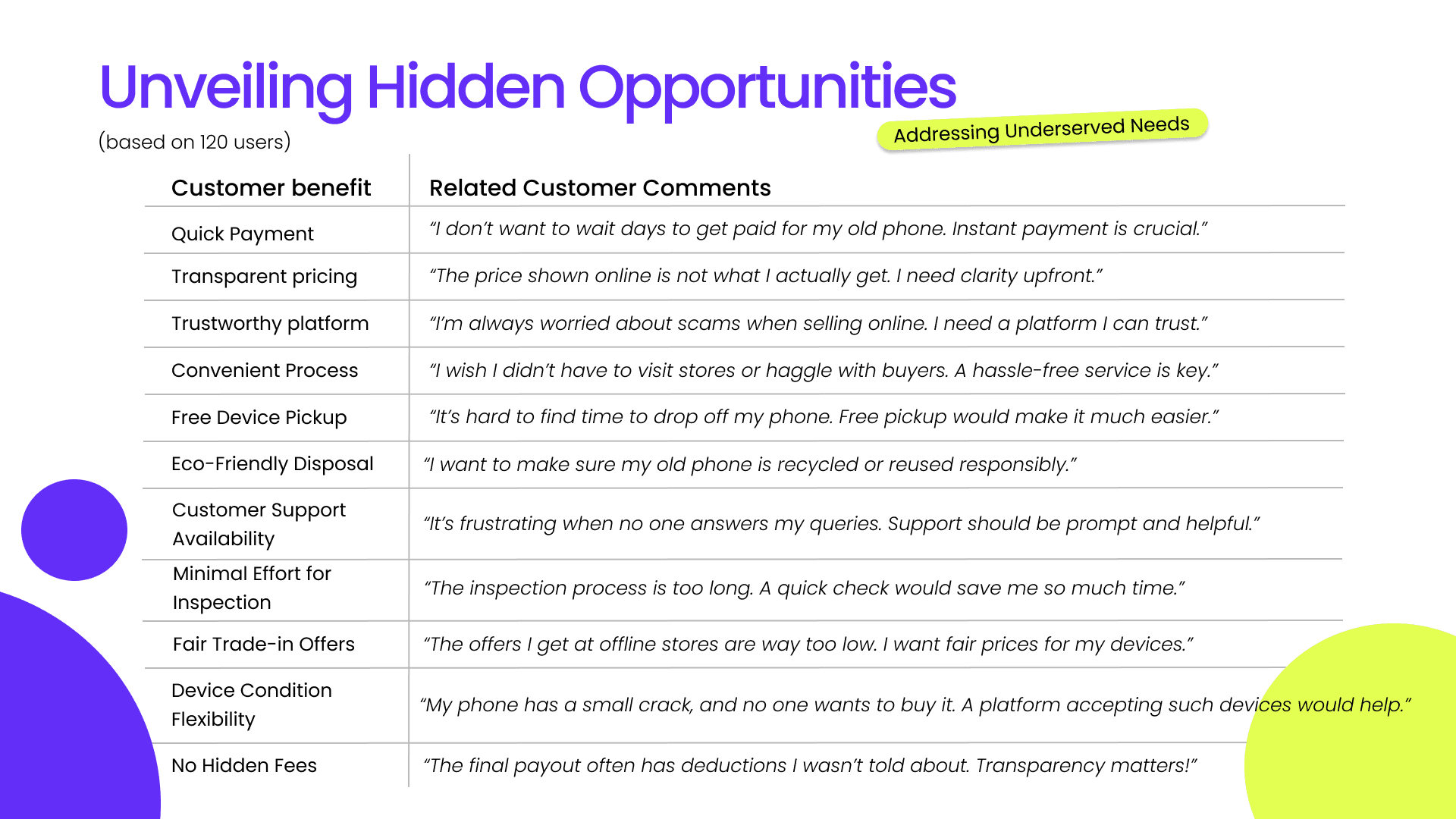
The user survey was instrumental in helping us understand exactly what users were looking for and pinpointing the unmet needs they experienced. The comments are translated for better understanding.
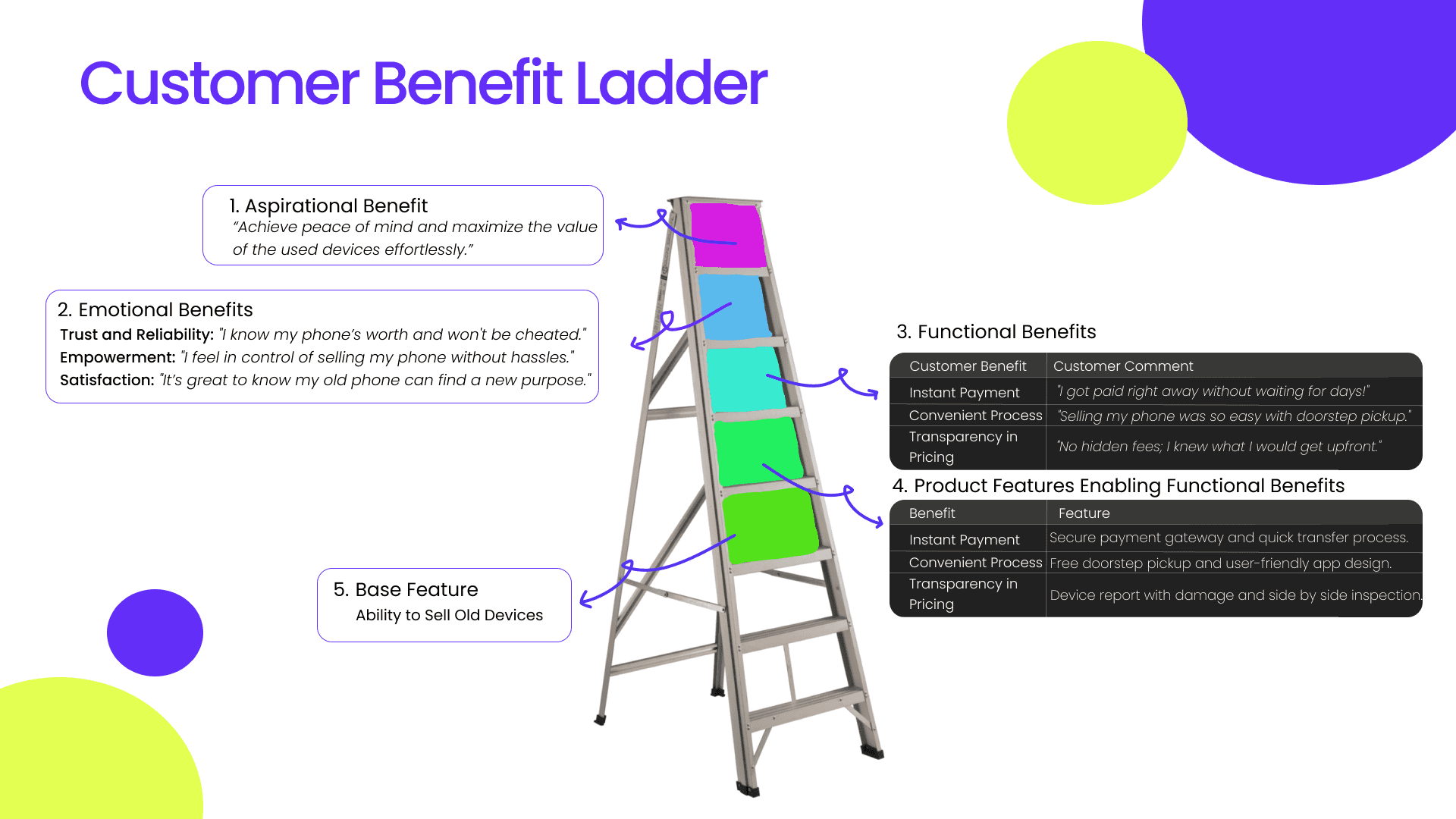
Just like Maslow's Hierarchy of Needs, there exists a Customer Ladder that outlines the journey from basic needs to aspirational benefits. At the base of this ladder are the must-have features of the product — the essential elements that users expect for the product to be functional. Next, we have the product features enabling functionality benefits, which are derived from the feedback and comments we received from users. These features directly address the users' needs and pain points, improving the overall user experience.
Moving up the ladder, we encounter the emotional benefits, which tap into how the product makes users feel, enhancing their satisfaction and connection with the brand. At the top of the ladder is the "AHA" moment, where the user experiences the aspirational benefit — that sense of delight and realization that the product has exceeded their expectations and aligns with their deeper goals or desires.
By addressing each level of the customer ladder, we not only meet basic needs but also build a stronger, more meaningful relationship with our users.
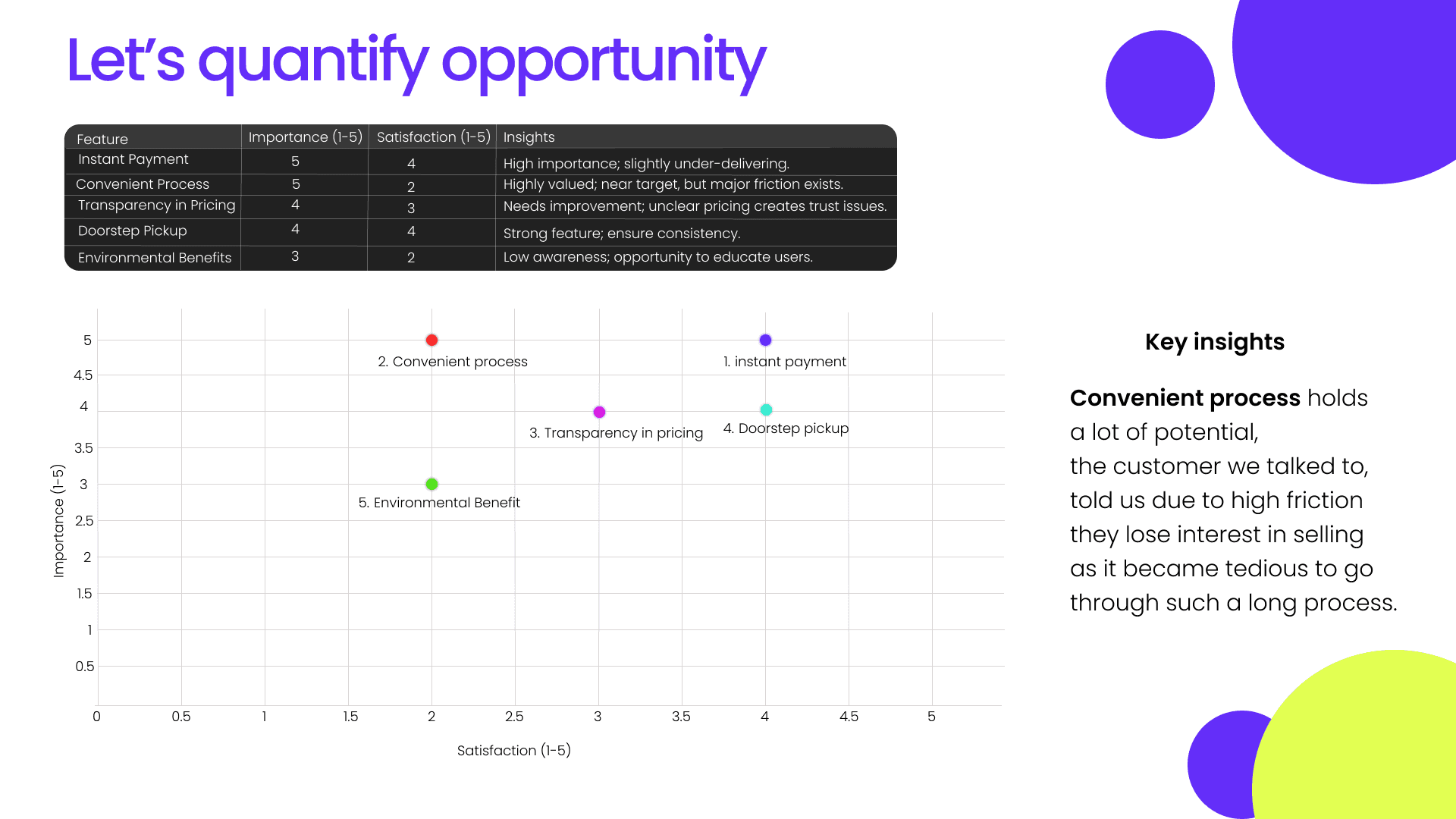
Quantifying the opportunity was crucial during the development process as it helped us identify which features had the highest importance to customers and where they were the least satisfied. By gathering data and analyzing customer feedback, we were able to prioritize improvements in areas that would have the most significant impact on user satisfaction. This approach allowed us to focus on the features that mattered most, ensuring that our efforts were aligned with customer needs and maximizing the overall value of the product.
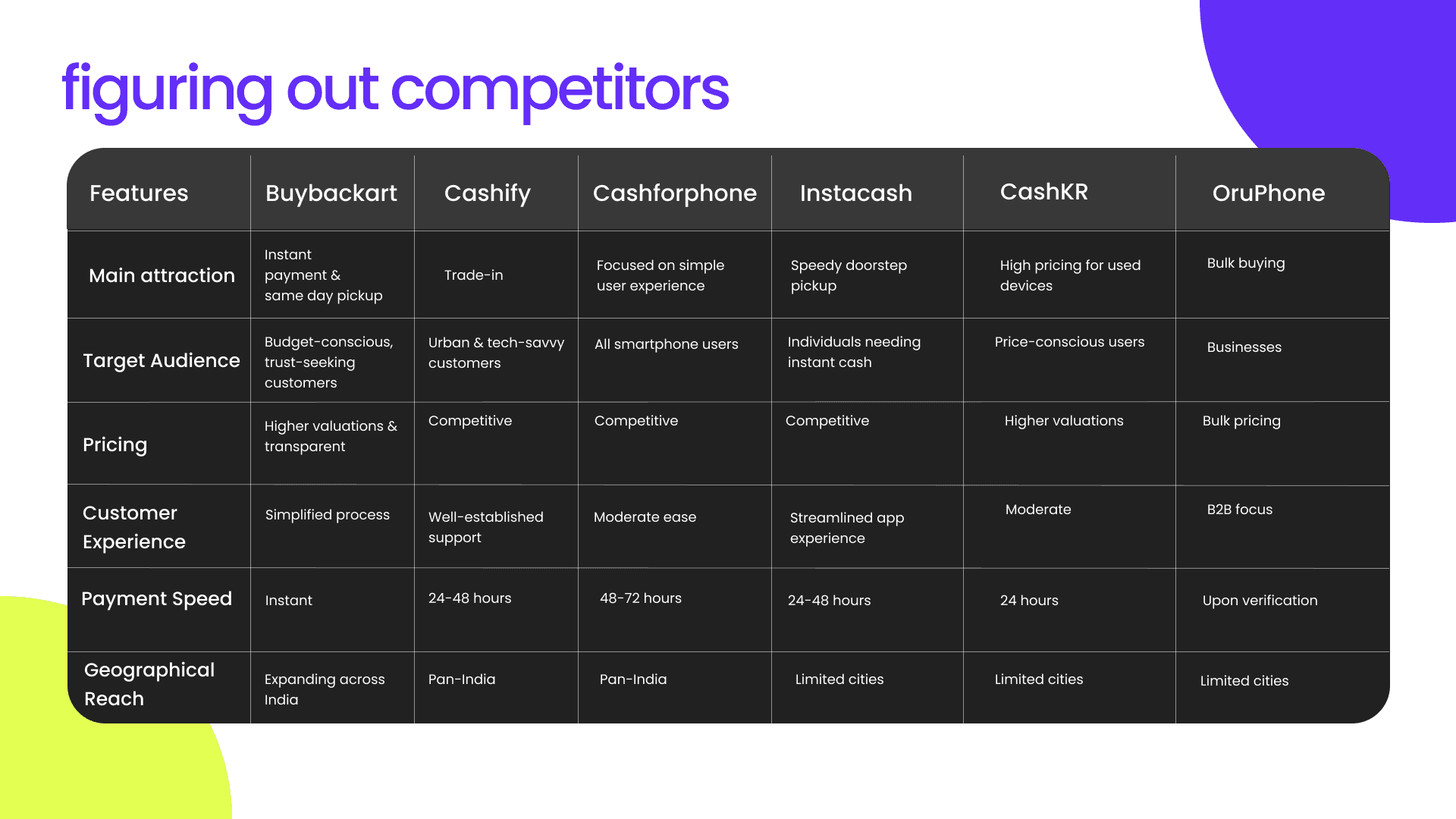
Since we faced intense competition in the same domain, we decided to dive deep into the offerings of our competitors to identify where we stood out. By thoroughly analyzing their products, features, and customer experiences, we were able to pinpoint gaps and areas where we could differentiate ourselves. This strategic approach helped us refine our unique value propositions and develop features that not only addressed unmet needs but also provided a superior experience, giving us a competitive edge in the market.
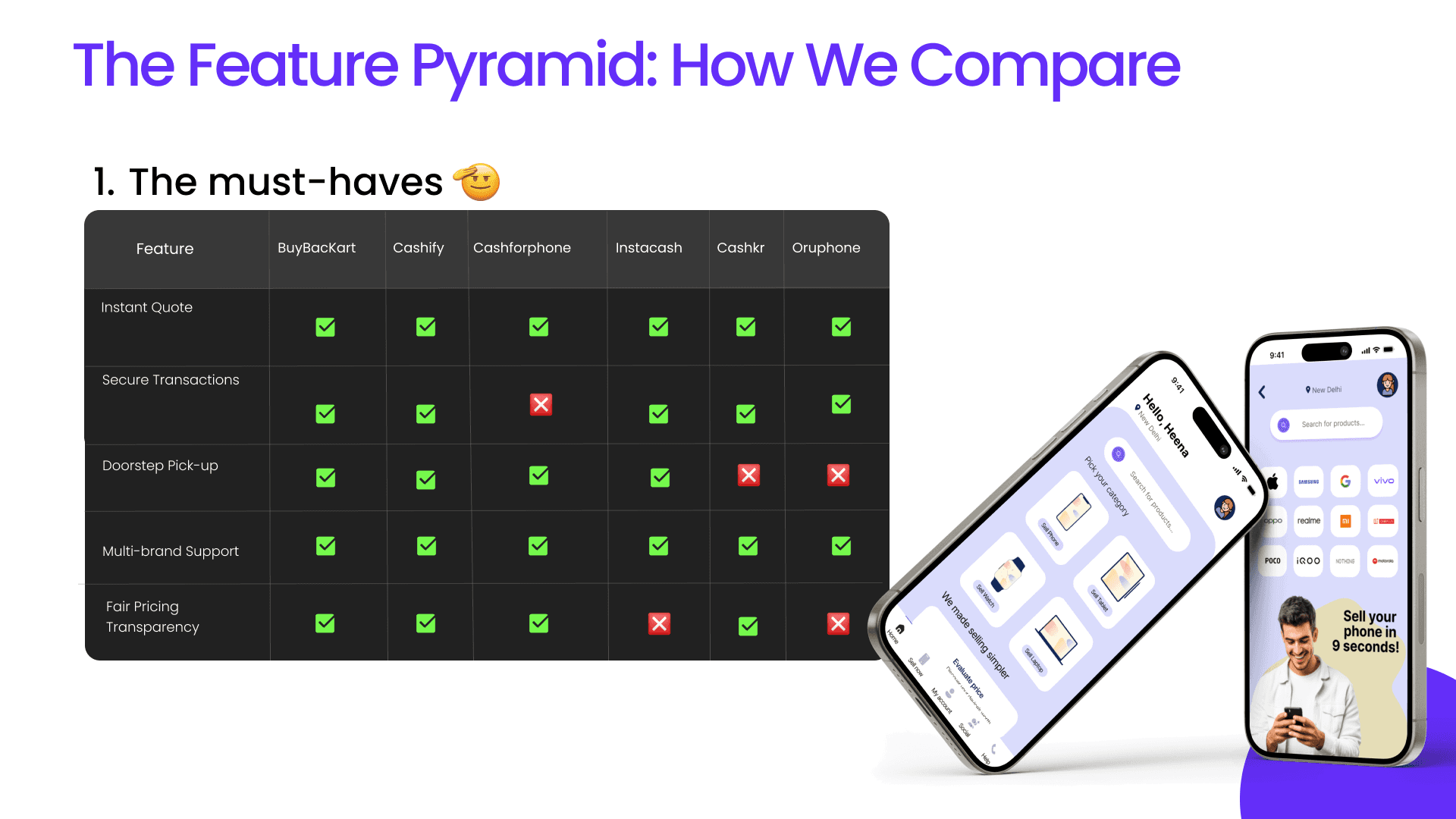
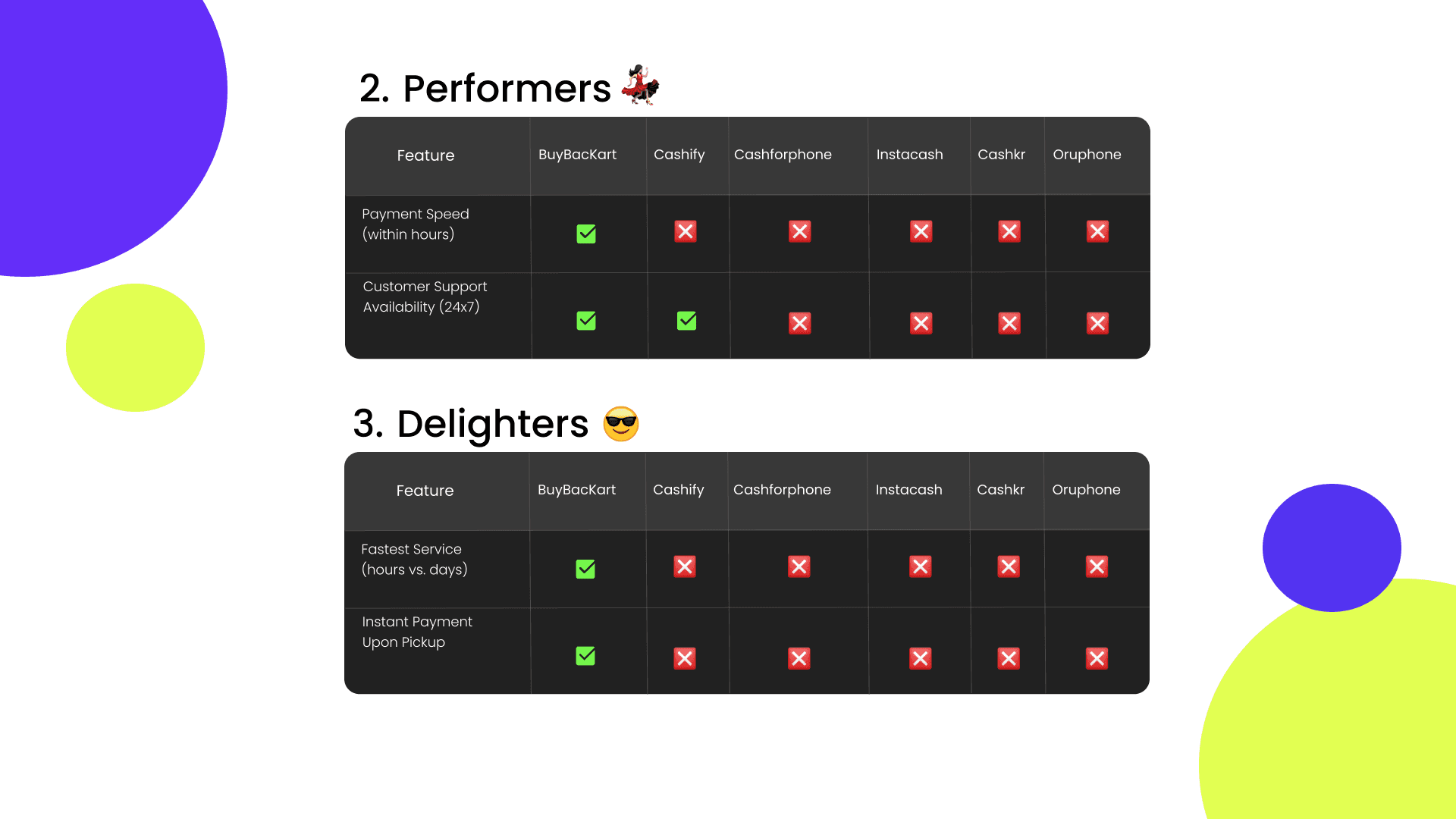
Applying the Kano Model helped us in understanding and categorizing customer needs based on their impact on satisfaction. It allowed us to identify which features would delight our users, which ones were expected as basic necessities, and which ones could differentiate us in the market. By classifying features into categories like Basic Needs, Performance Needs, and Excitement Needs, we were able to prioritize development efforts effectively. This framework helped ensure that we met customers' core expectations while also introducing features that would create a sense of delight and long-term loyalty.
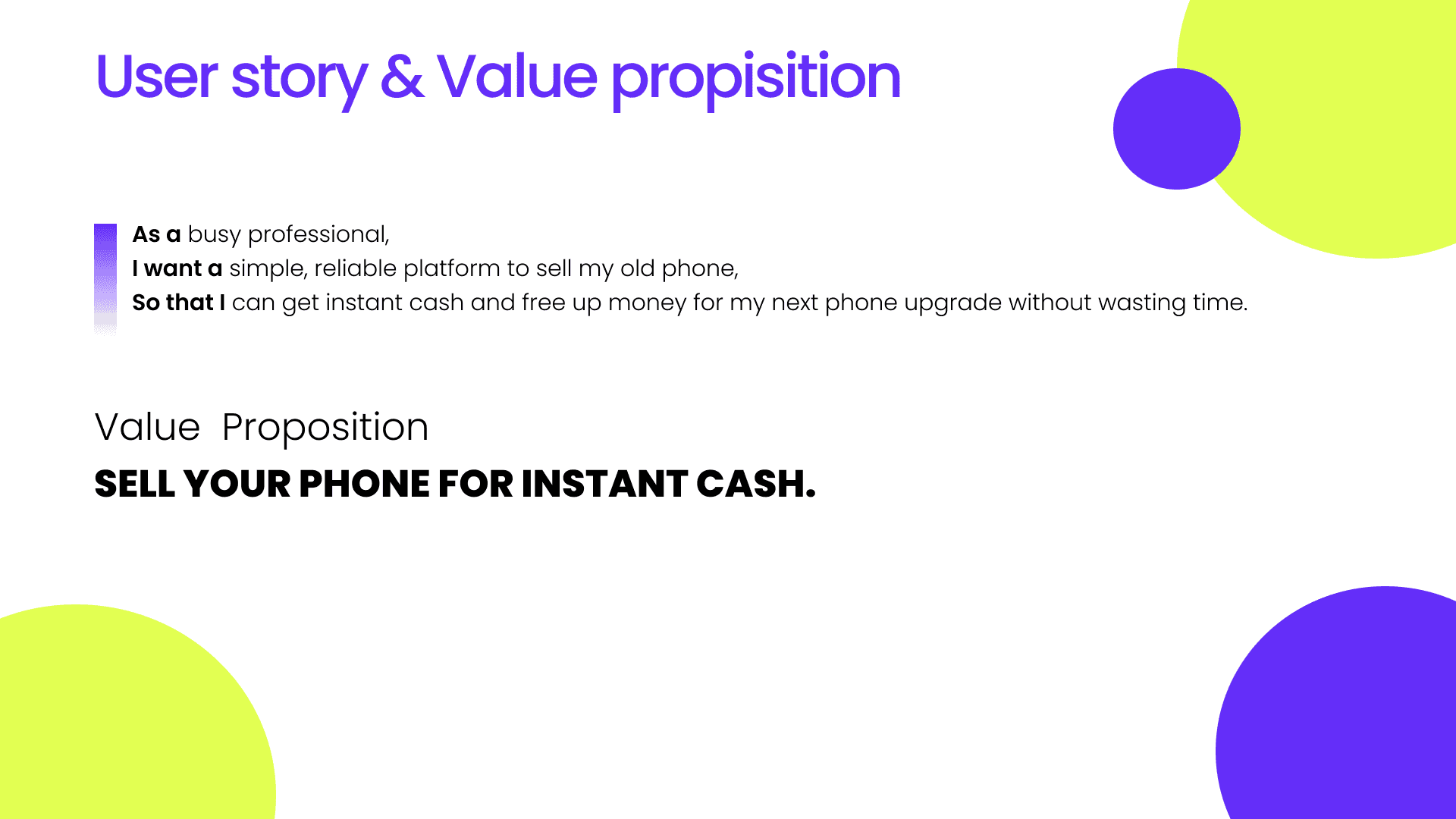
Finally, we reached our value proposition, which clearly articulated the unique benefits our platform offers to customers. By addressing unmet needs, differentiating ourselves from competitors, and creating a seamless, value-driven experience, we positioned our product as the go-to solution for users looking for competitive pricing, convenience, and trust in the second-hand mobile market. Our value proposition highlighted not only the functional benefits but also the emotional and aspirational rewards, making it a compelling reason for customers to choose us over other alternatives.
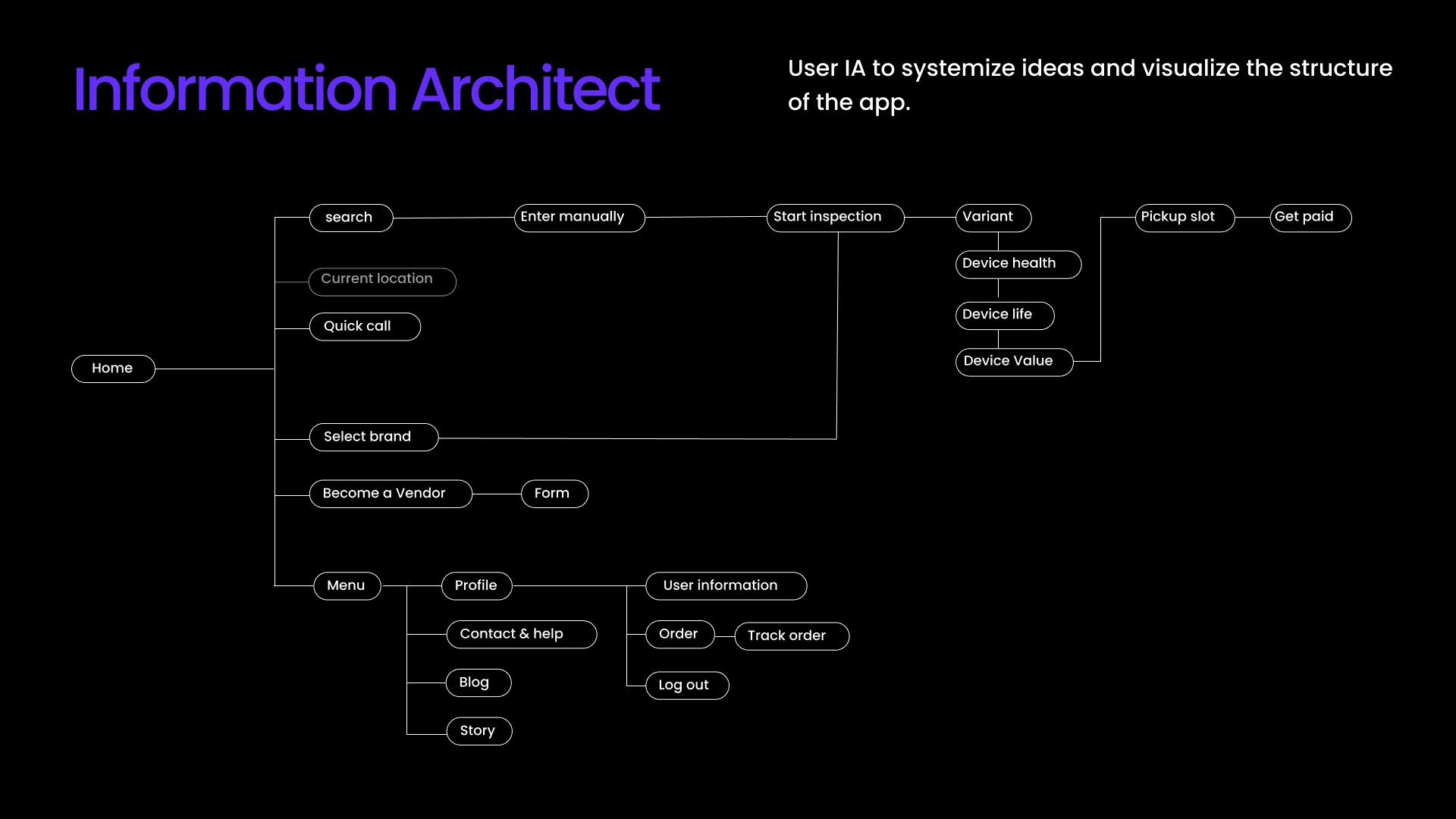
Applying the UX principal we built our product.
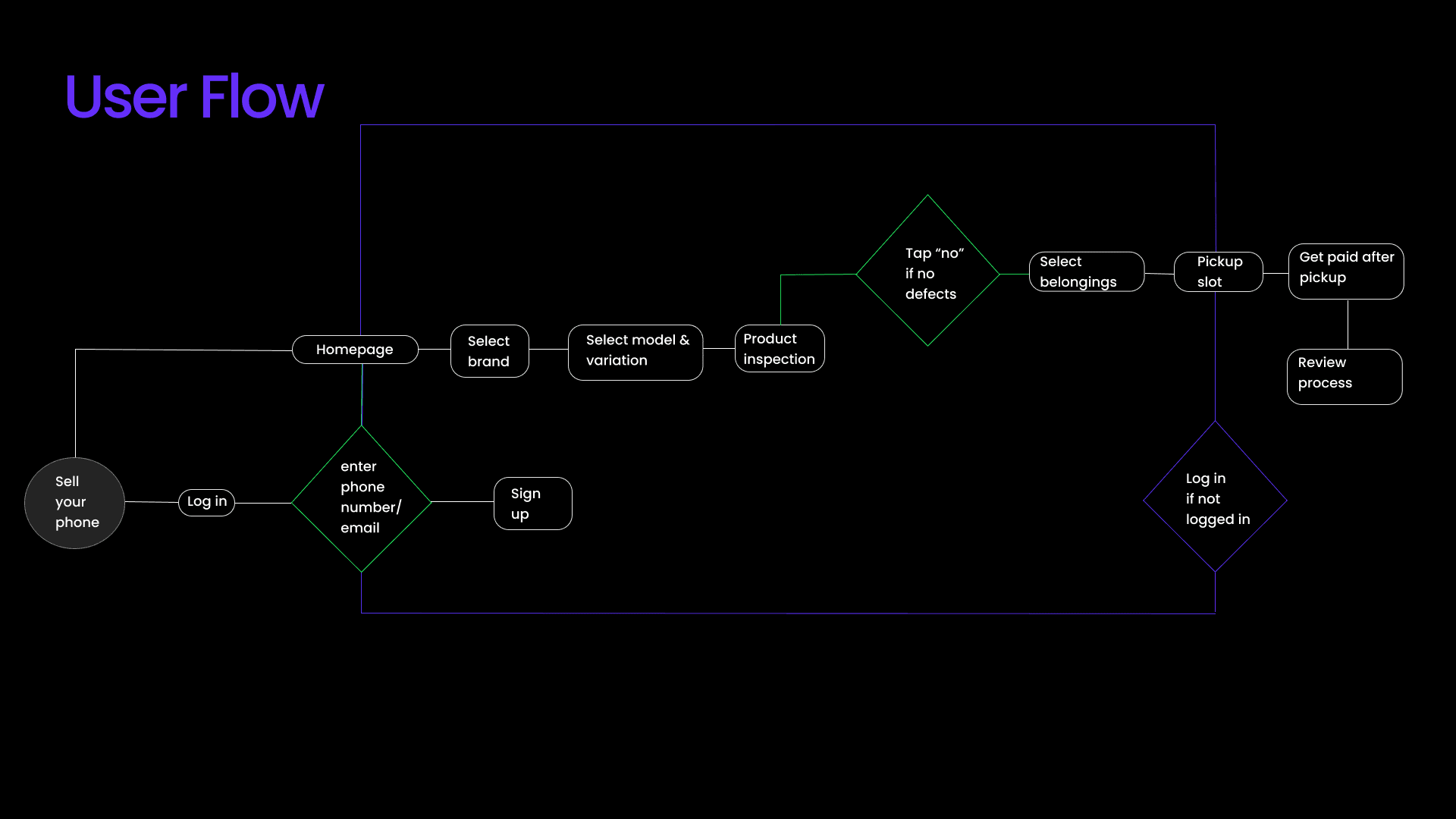
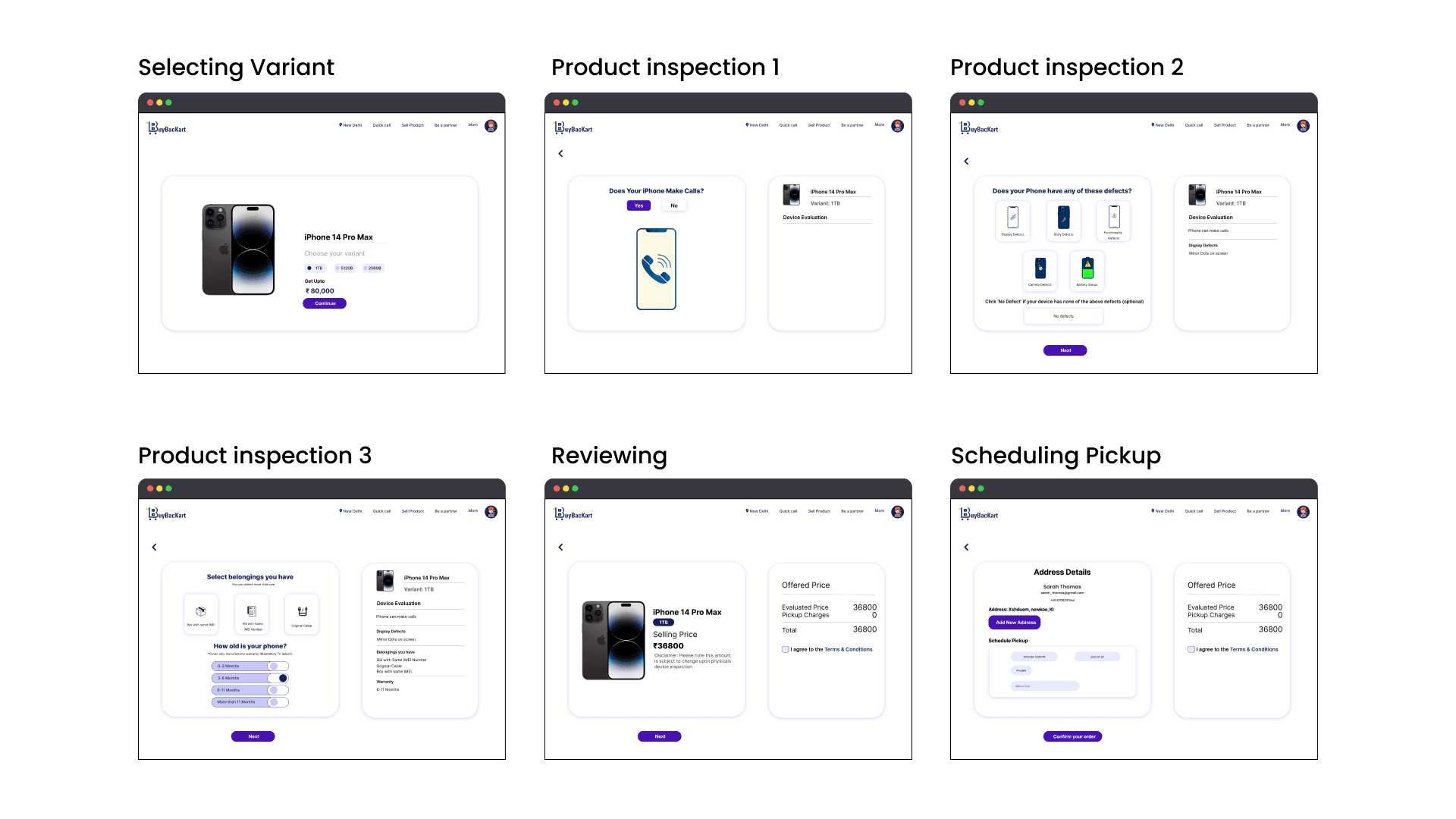
The user flow outlines the path a customer takes from their initial interaction with the platform to completing their desired action, ensuring a smooth and intuitive experience.
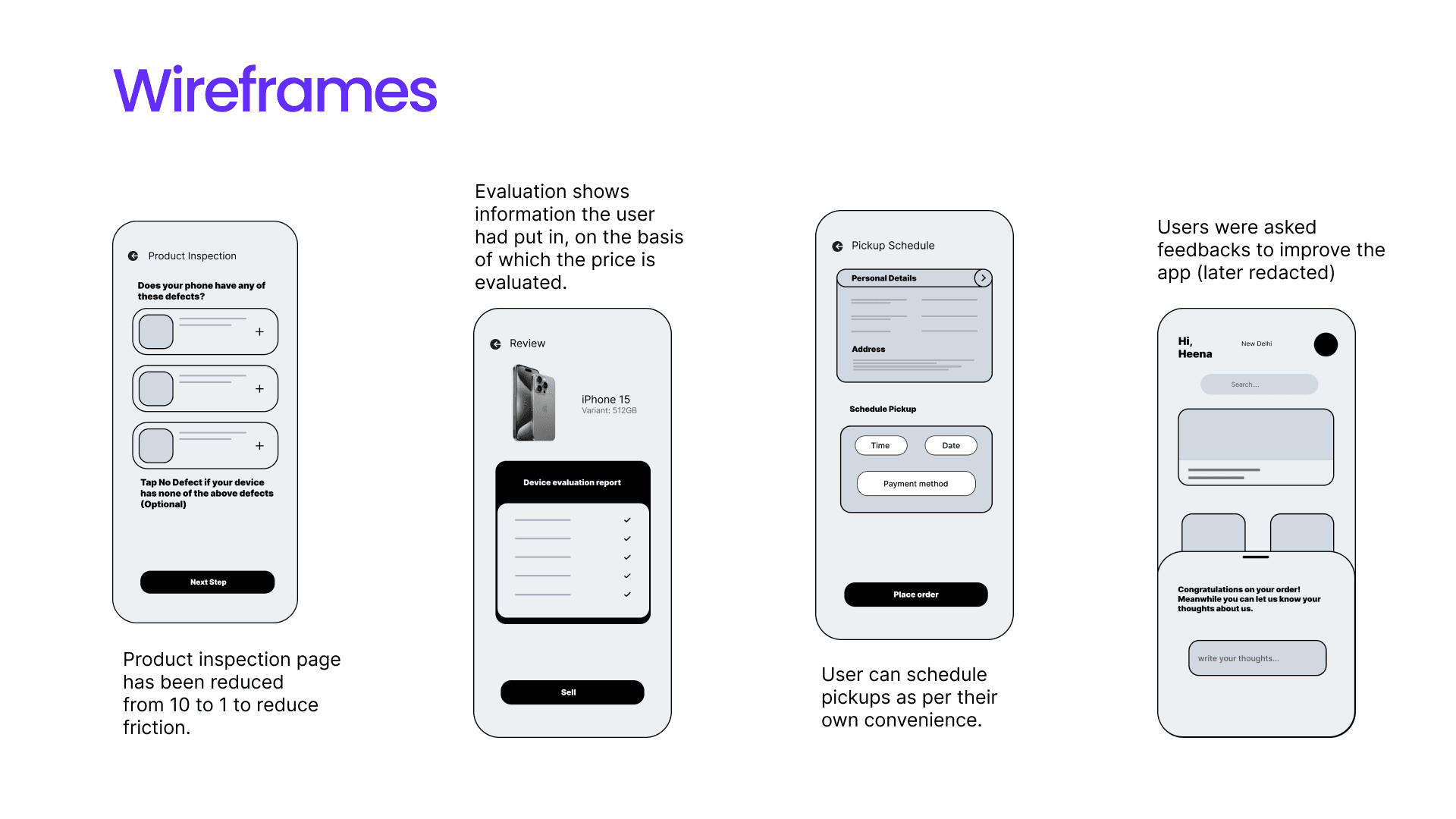
The wireframes were both the most exciting and tedious task of the entire process. On one hand, designing the wireframes allowed us to bring our ideas to life, giving a clear visual representation of the user flow and layout. It was thrilling to see how each feature would come together and how we could create an intuitive, user-friendly experience.
On the other hand, the task was also tedious because it required careful attention to detail and constant iteration.
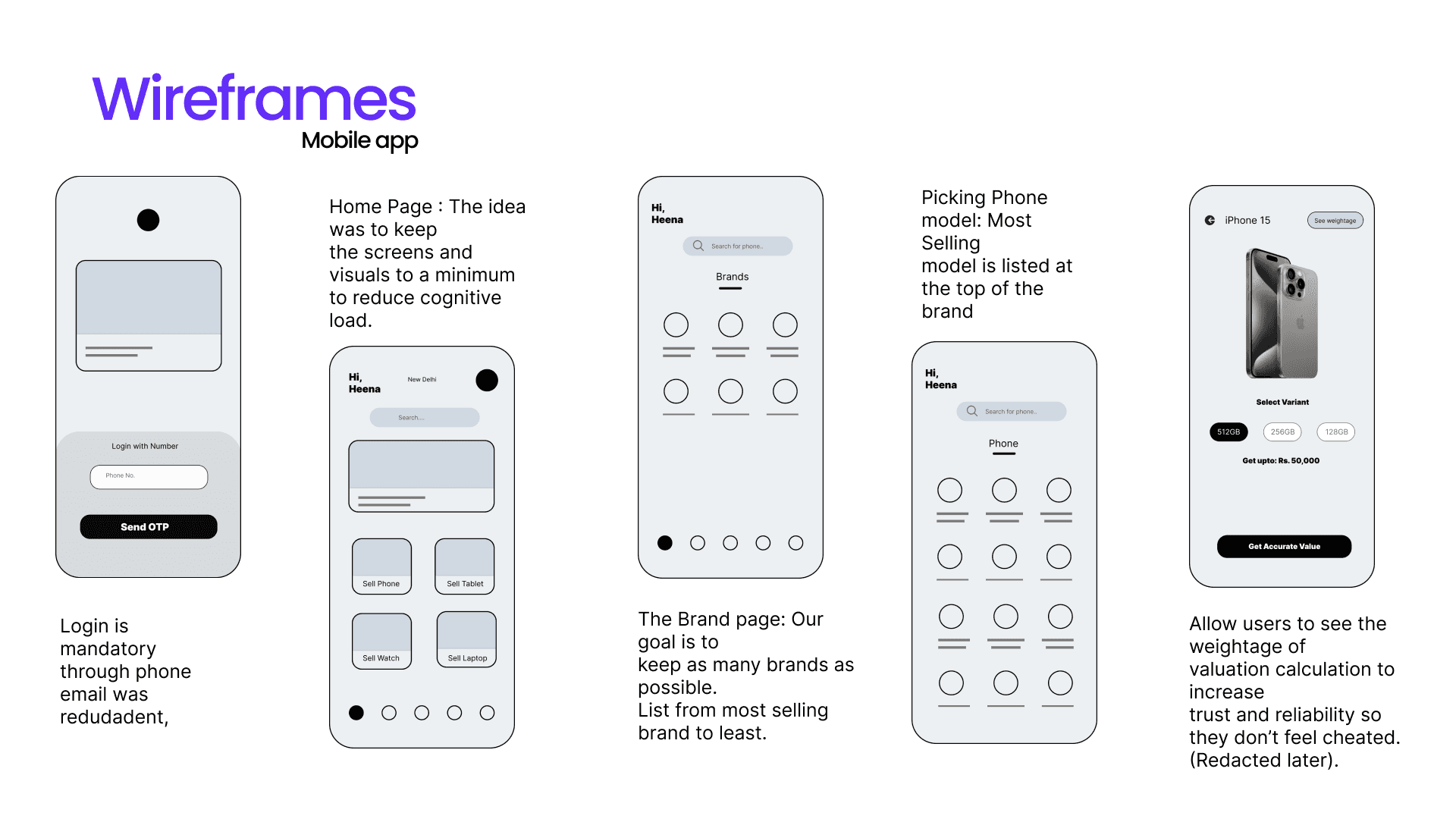
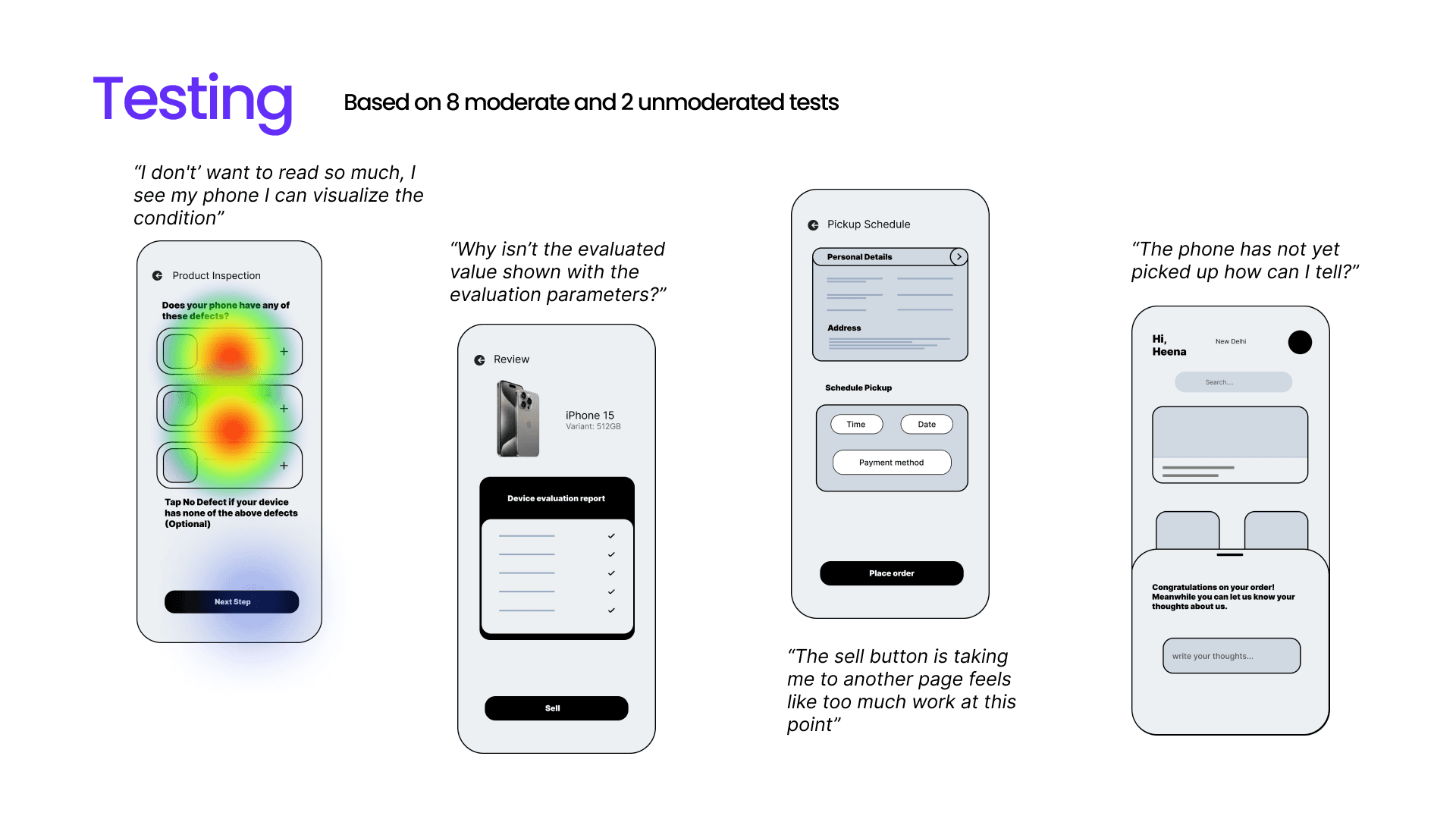
After finalizing the wireframes, we conducted 8 moderated and 2 unmoderated tests to identify gaps and successful features, allowing us to refine the design and improve the user experience.
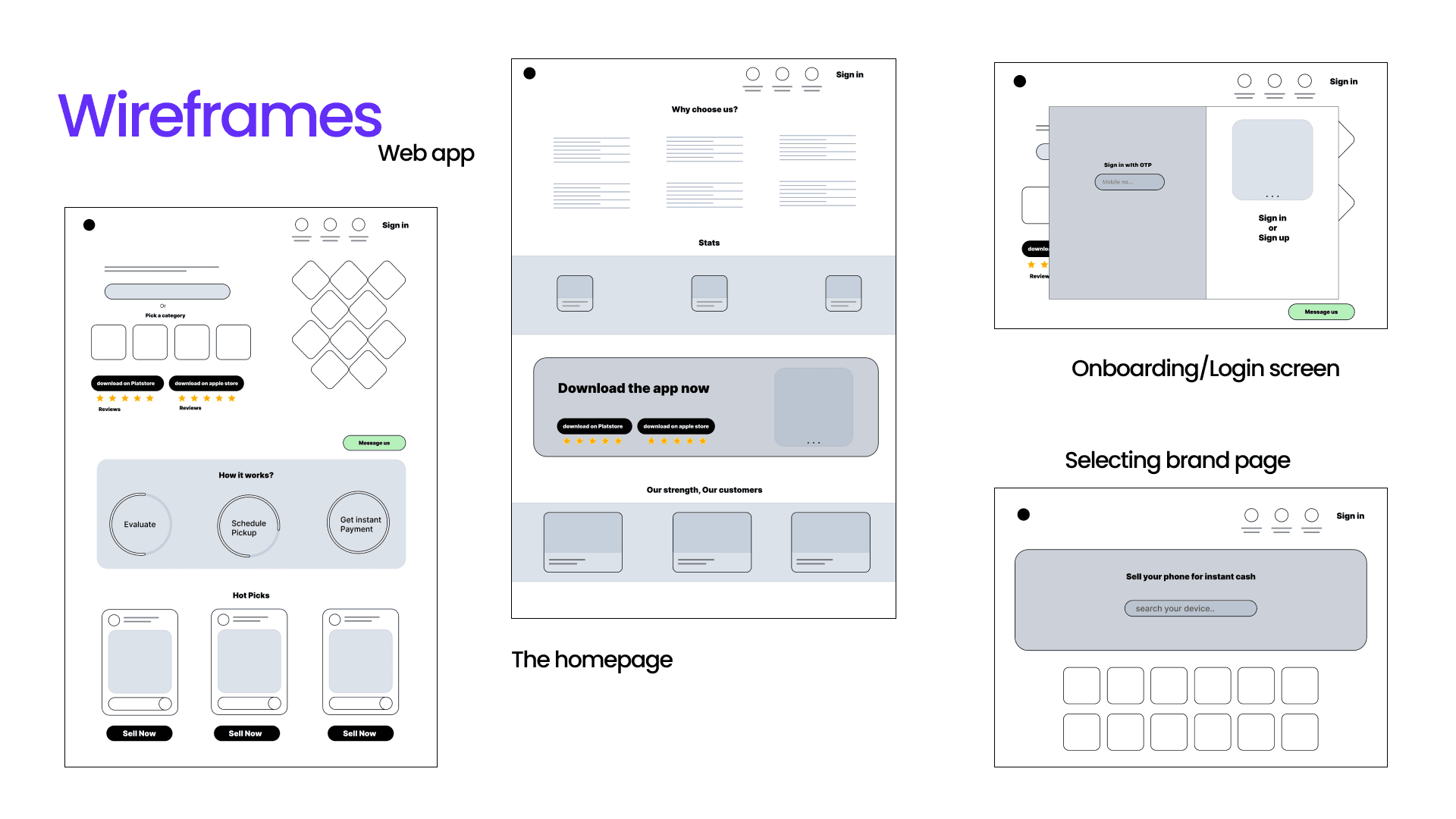
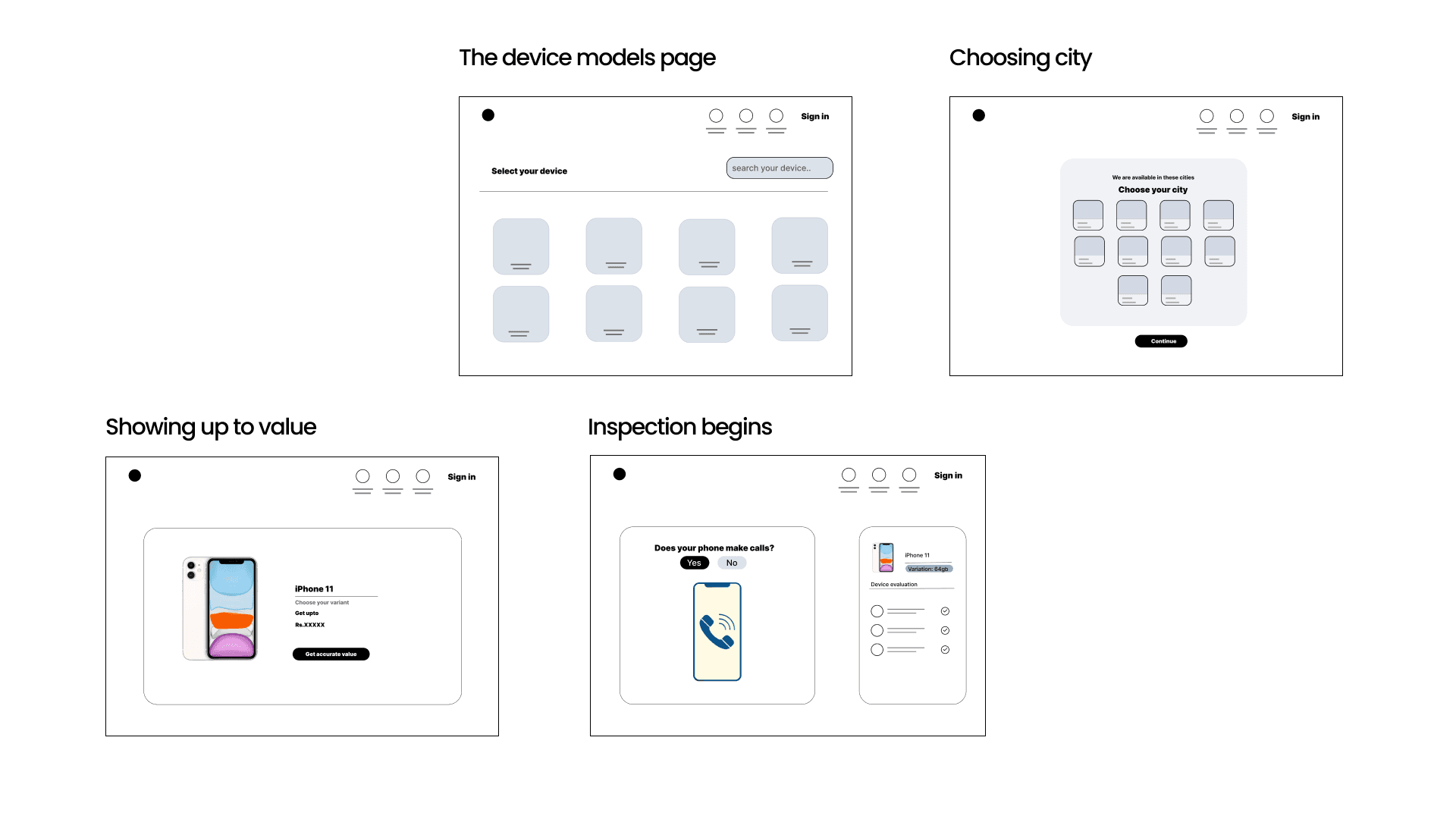
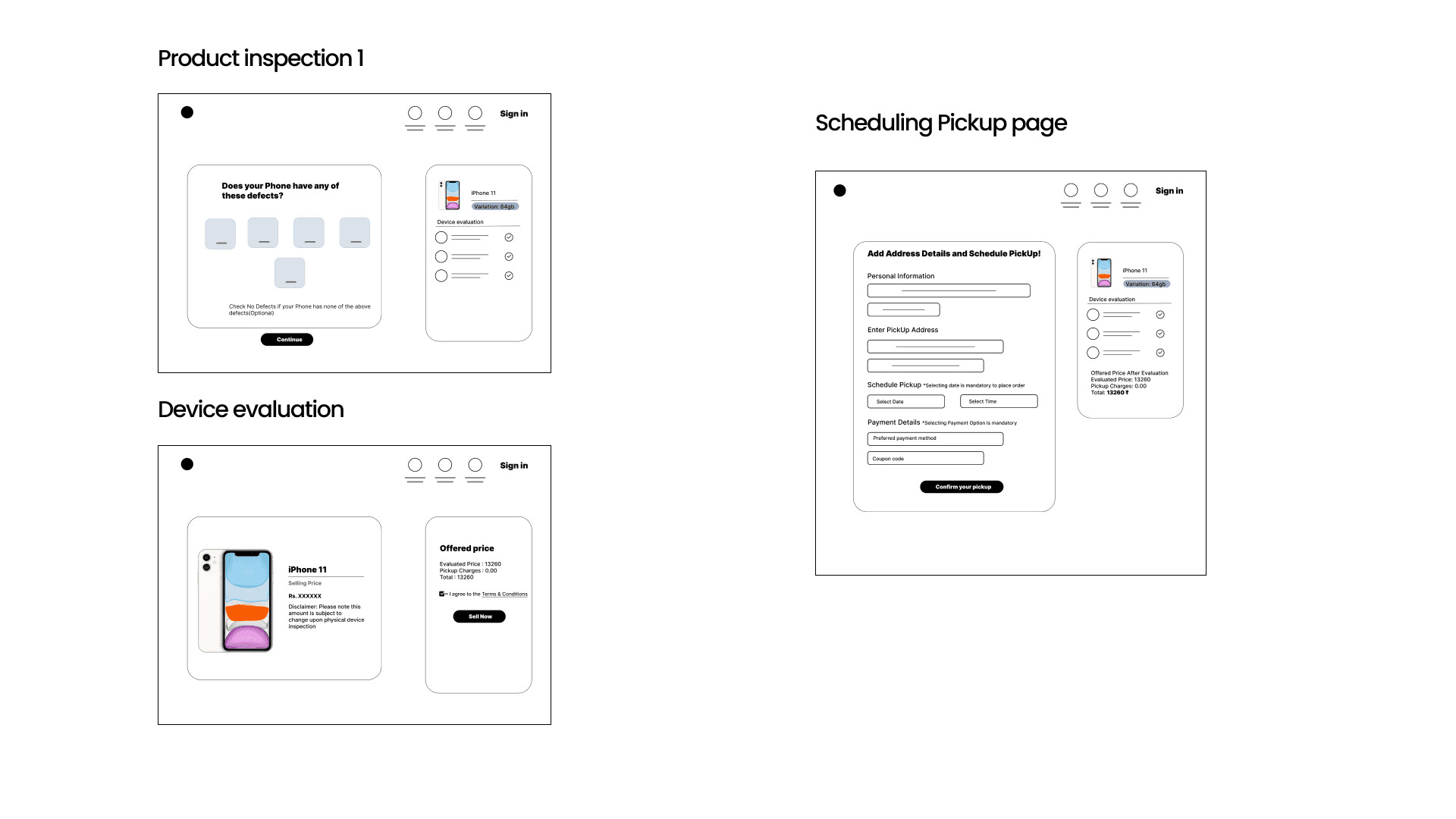
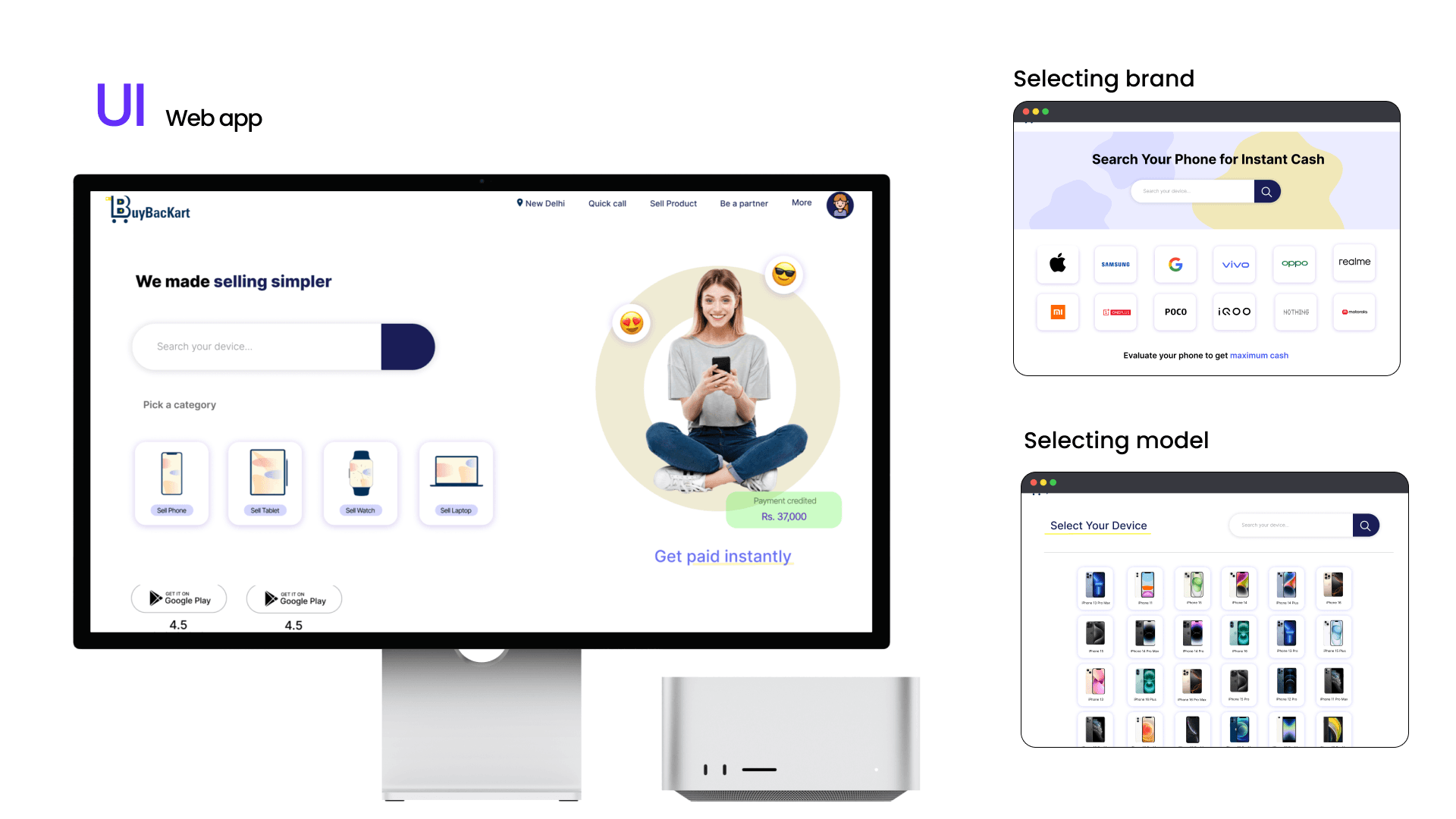
Turning wireframes in product pages
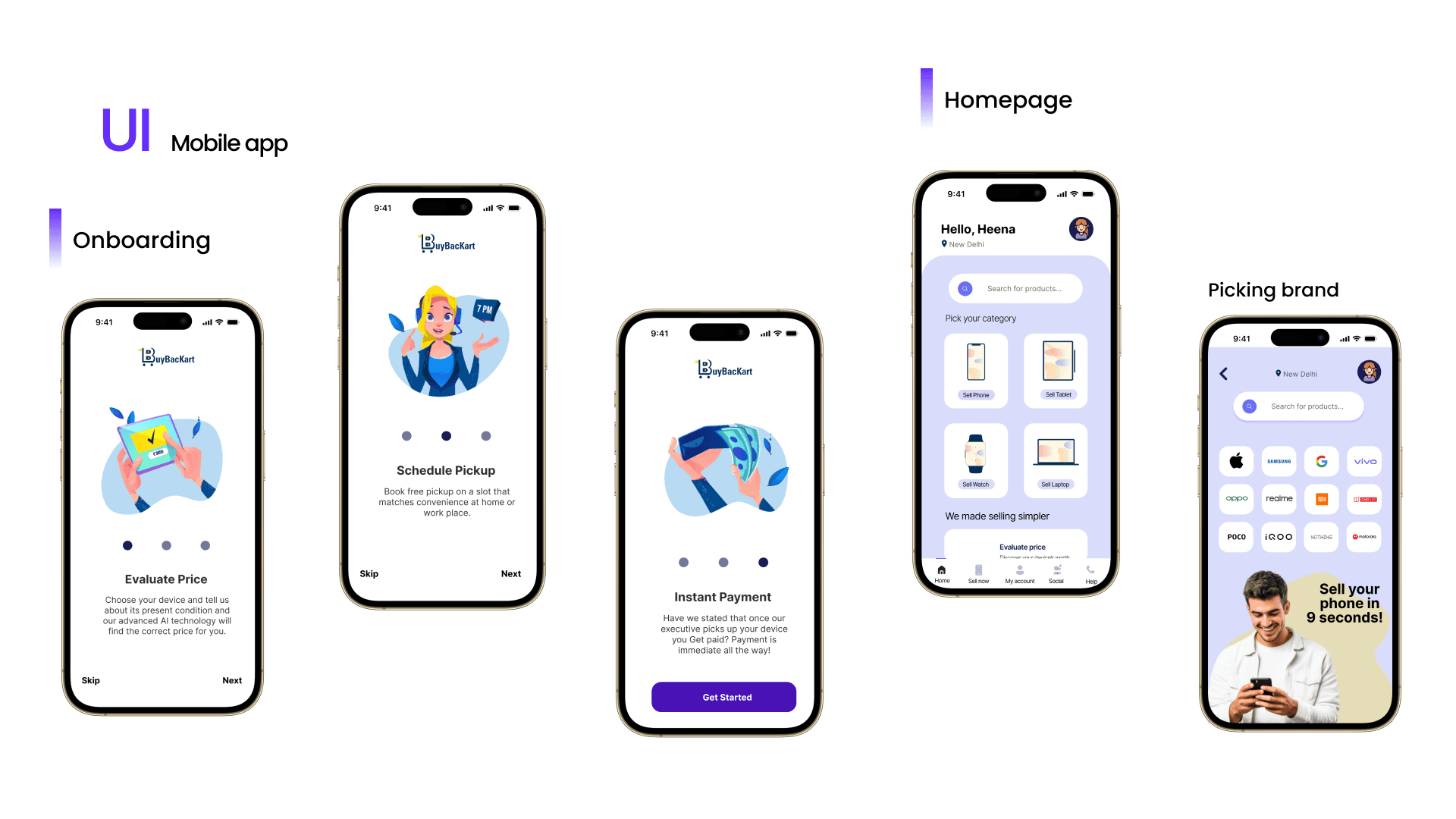
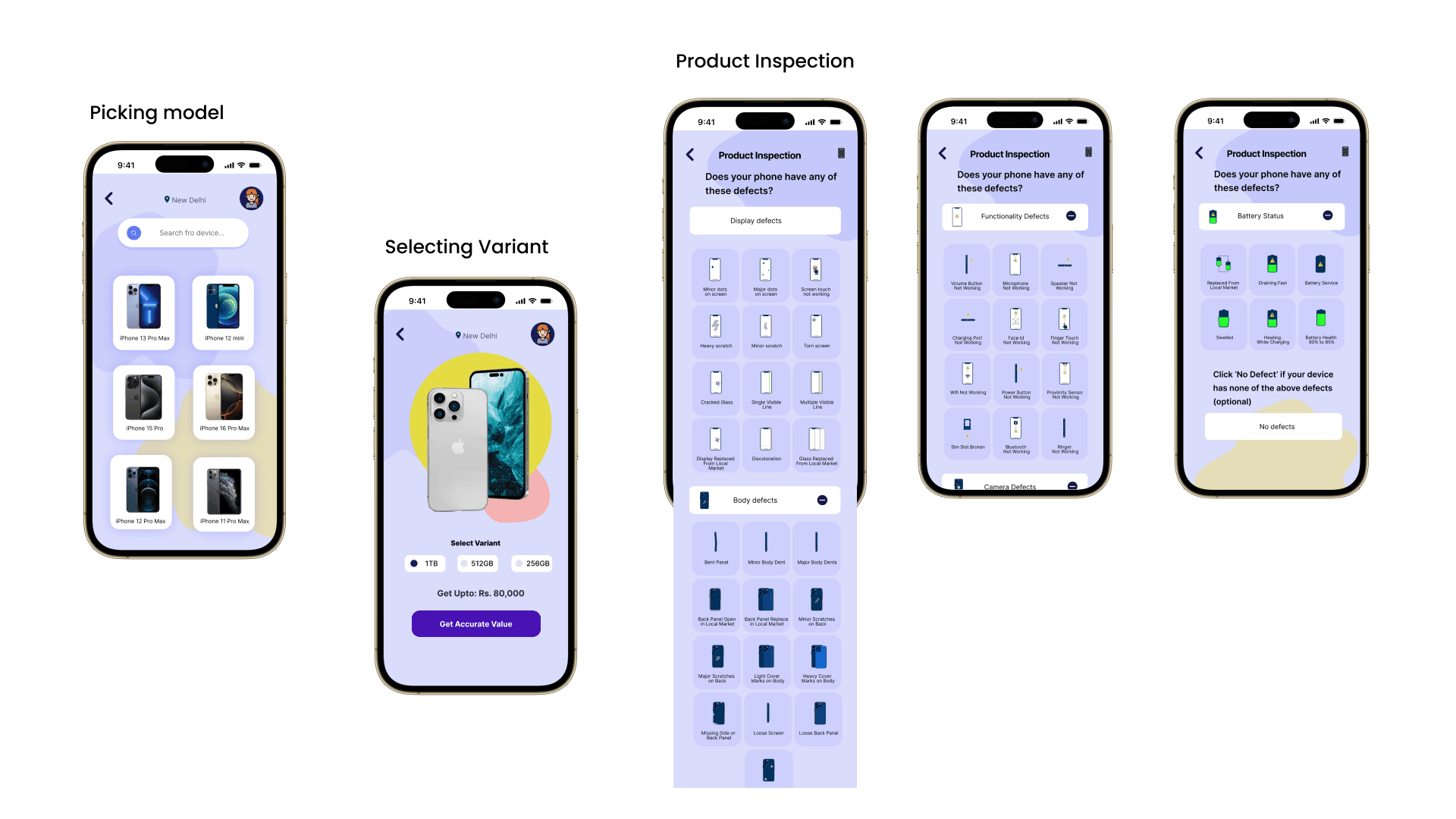
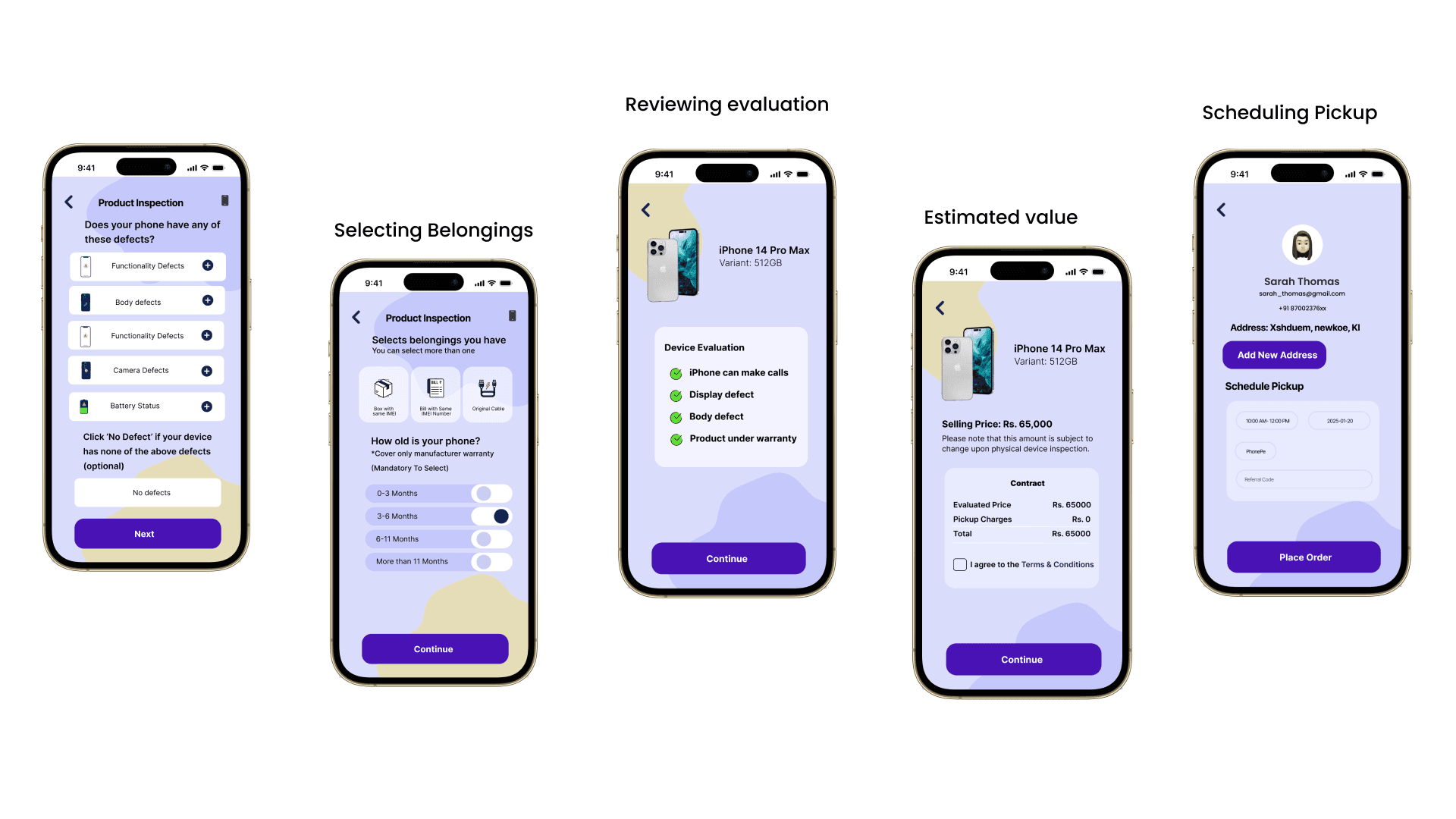
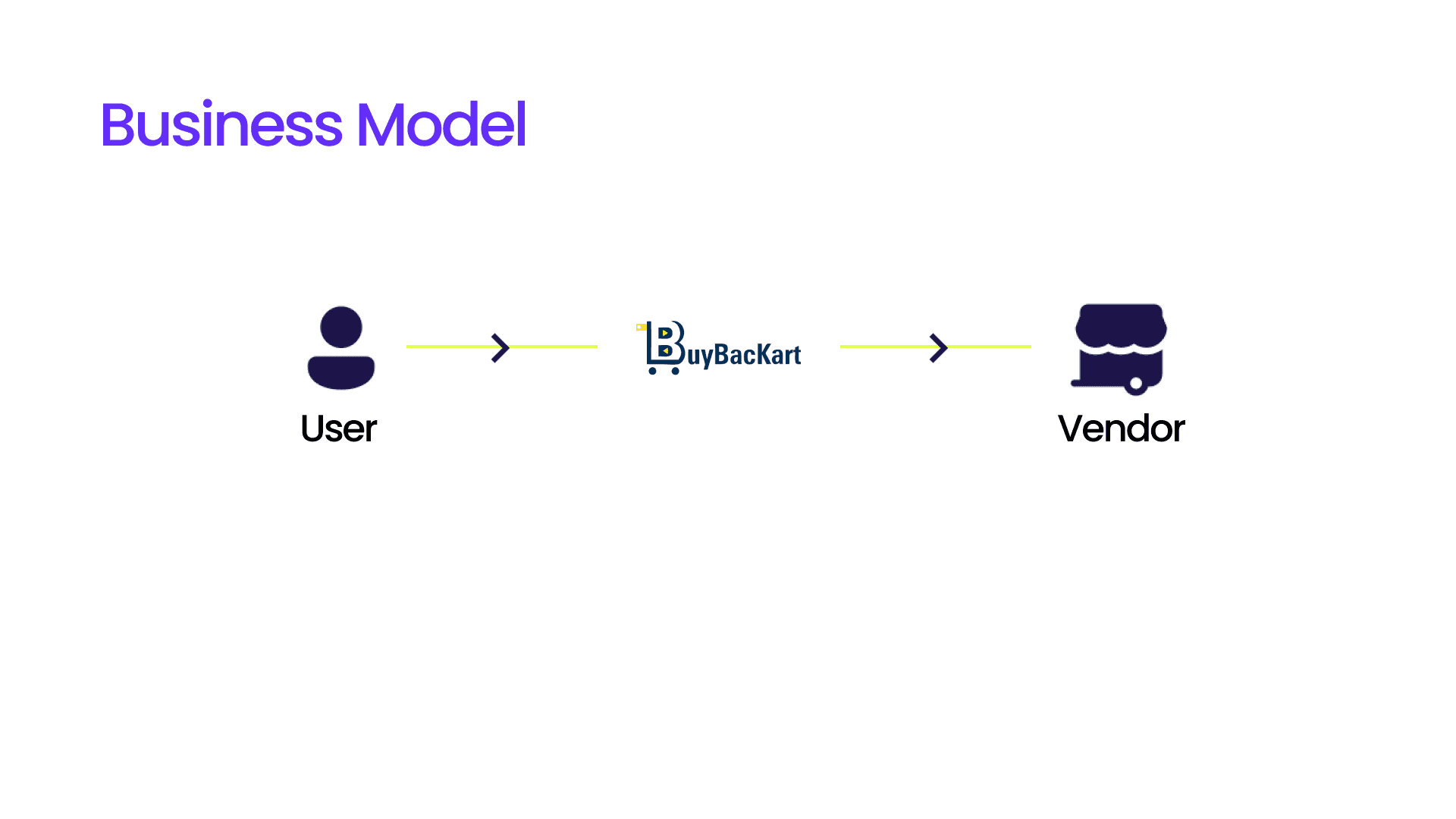
Our business model is one of the simplest and most straightforward in the industry.
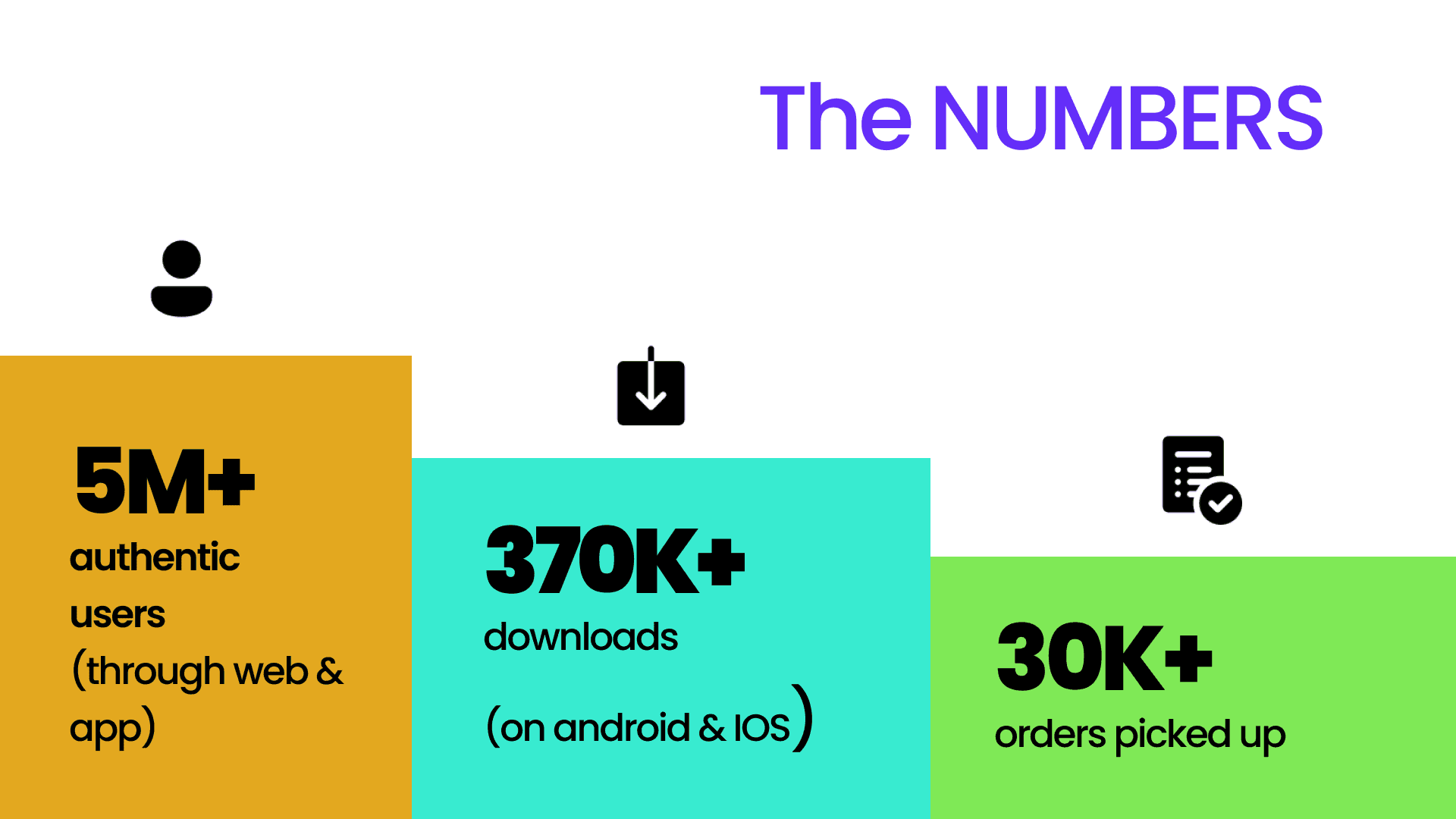
Market adoption began shortly after the launch of our website in 2022. With a user-friendly platform and competitive offerings, we quickly gained traction and started attracting customers, building trust, and establishing our presence in the market.